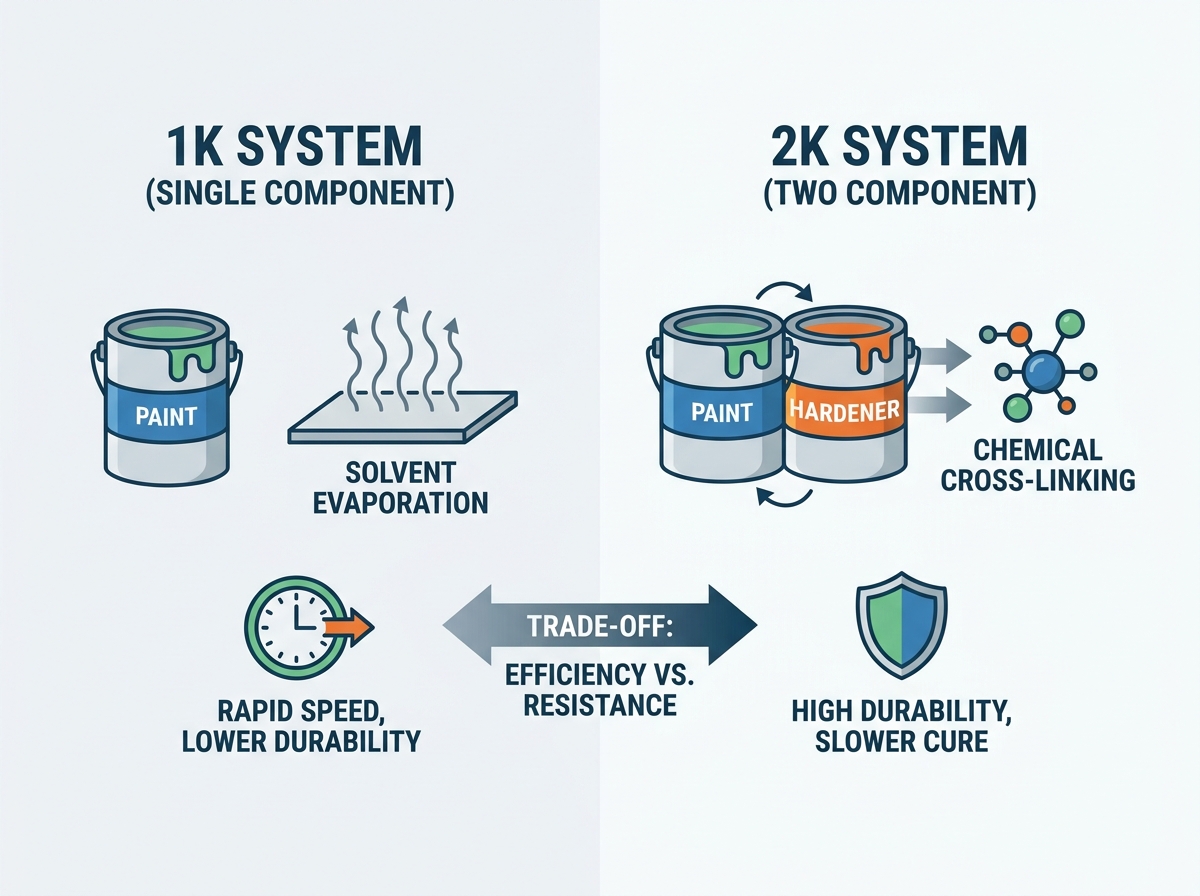
Industrial facility managers, auto body shops, and original equipment manufacturers (OEMs) face a relentless daily challenge. They must constantly balance high operational throughput against long-term coating durability. Finding the right finish often dictates whether a production line stays profitable or gets bogged down by severe curing bottlenecks. 1K industrial paint offers a highly streamlined solution to these operational hurdles. We define it as a single-component system requiring no hardener or activator. Instead, it cures entirely through solvent evaporation or exposure to ambient moisture. This guide moves beyond basic definitions to evaluate where single-component systems genuinely drive commercial return on investment. We will explore their structural limitations in depth. You will also learn how to assess them effectively against multi-part alternatives to ensure success on your commercial projects.
Key Takeaways
- 1K industrial paint eliminates pot-life constraints and reduces material waste, making it highly cost-effective for high-volume, rapid-turnaround applications.
- While offering superior ease-of-use and faster flash-off times, 1K coatings generally yield lower chemical and mechanical resistance compared to catalyzed 2K systems.
- Ideal use cases include automotive refinishing (as a basecoat), machinery touch-ups, interior industrial parts, and environments with moderate wear.
- Procurement decisions should hinge on operational capabilities (ventilation, drying space) and strict total cost of ownership (TCO) calculations, factoring in labor and rework rates.
The Core Mechanics of 1K Industrial Paint Systems
Single-part paints dry very differently than complex multi-part products. They rely entirely on physical drying mechanisms. Water or solvent molecules escape into the surrounding air through evaporation. The solid binder molecules then lock together tightly. They form a continuous, protective film over the substrate. This differs completely from two-component (2K) products. Multi-part paints rely on chemical cross-linking. A liquid catalyst forces a permanent molecular change. You see this chemical reaction often in heavy-duty urethanes and epoxies.
The composition baseline matters greatly for your end results. Specific binders dictate the final performance capabilities. Manufacturers commonly use acrylics, alkyds, or nitrocellulose as foundation materials. Acrylics provide excellent color matching and resist yellowing over time. Alkyds offer robust coverage and adhere beautifully to bare metals. Nitrocellulose delivers incredibly fast drying characteristics. You find this highly useful in fast-paced manufacturing environments.
The operational impact remains profound on the shop floor. You face zero pot-life constraints with these products. The paint remains liquid indefinitely when kept sealed. You simply open the container and stir the contents. You pour it directly into your spray gun. Application begins immediately without complicated measuring. Spray gun maintenance becomes significantly simpler. You just flush the equipment using standard thinners. You never worry about catalyzed paint hardening inside your expensive tools. Zero catalyzed waste means lower disposal costs daily.
Advantages and Structural Limitations (A Balanced Assessment)
Every coating technology brings specific trade-offs to the production line. We must evaluate both the workflow benefits and the physical risks.
Performance Advantages (The "Why")
- Workflow Efficiency: Rapid flash-off speeds up production drastically. Tack-free times happen in mere minutes. You can move parts down the assembly line faster.
- Cost Efficiency: Upfront material costs drop considerably. You eliminate the need for expensive activators. You stop throwing away unused catalyzed paint at the end of shifts.
- Application Forgiveness: Atomization requires much less effort. You avoid strict mixing ratios entirely. Localized touch-ups blend easily into existing finishes without noticeable halos.
Technical Limitations (The Risks)
- Durability Ceilings: Overall chemical resistance remains lower. Harsh industrial solvents can re-liquefy the coating. Heavy mechanical abrasion damages the surface much faster than cross-linked alternatives.
- Build Limits: Applying excessively thick coats traps solvents. You might experience a severe defect called "solvent pop." The surface skins over too quickly, and trapped gases blister the finish.
- Re-coatability Issues: Upgrading later with a 2K clearcoat poses serious risks. Aggressive solvents in the clear might attack the base layer. You risk severe lifting or wrinkling without proper isolation coats.
![1k industrial paint]()
1K vs. 2K Paint: A Commercial Decision Framework
Making the right commercial choice requires evaluating variables beyond just the initial purchase price. The table below outlines the core differences between the two systems.
Industrial Coating Comparison Chart
| Feature | 1K Paint Systems | 2K Paint Systems |
| Curing Mechanism | Solvent/Water Evaporation | Chemical Cross-linking |
| Pot Life | Infinite (when sealed) | Strictly limited (hours) |
| Chemical Resistance | Moderate to Low | Extremely High |
| Application Speed | Very Fast | Slower (requires mixing) |
Material and Labor Efficiency
We must carefully compare material expenses and labor hours. 1K industrial paint offers clear upfront savings. You buy fewer components from your supplier. You spend less time measuring and mixing materials. Labor drops significantly during the preparation phase. Cleanup requires much less effort and thinner. However, you must weigh this against lifecycle longevity. Multi-part systems provide longer lifecycles in harsh environments. They require fewer reapplications over a decade. You must calculate the cost of potential re-work. Frequent touch-ups might negate your initial material savings completely.
Environmental and Compliance Factors
Volatile Organic Compound (VOC) emissions require strict operational attention. Many regions enforce harsh environmental regulations on paint facilities. Traditional solvent-based single-part paints often emit high VOCs. They release fumes during the entire evaporation phase. You might easily exceed facility emission caps. Modern waterborne options solve this regulatory issue effectively. Waterborne formulas keep operations fully compliant. High-solid two-part paints also lower overall VOC outputs. You must match the chemistry directly to local zoning laws.
Facility and Tooling Requirements
Infrastructure dictates your product choices heavily. Single-part systems require minimal specialized gear. Standard ventilation works perfectly in most scenarios. You need basic respirators and standard spray booths. Two-part systems demand much more investment. They contain dangerous isocyanates that harm human health. You must use expensive air-supplied respirators. Downdraft spray booths become mandatory for safety. Specialized handling protocols increase overhead costs significantly. You must train your staff extensively to handle them.
Primary Applications: Where 1K Paint Delivers Maximum ROI
Understanding where these products excel prevents costly misapplications. Certain industries rely on them exclusively for their unique properties.
Automotive Refinishing (Two-Stage Systems)
Body shops rely heavily on single-part formulas daily. They use them primarily as high-pigment basecoats. The basecoat delivers the exact metallic or solid color match. It dries rapidly to a smooth, matte finish. Technicians then apply a catalyzed clearcoat directly over it. This two-stage process remains an industry standard worldwide. It combines excellent color accuracy with ultimate UV protection. The base layer flashes off quickly, keeping booth cycles short.
Commercial Fleet and Machinery Maintenance
Agricultural equipment takes a severe beating outdoors. Commercial fleets need constant aesthetic upkeep. Speed often trumps absolute chemical immunity in these sectors. You need fast touch-ups to keep fleets moving profitably. Non-submerged structural steel benefits greatly from these systems. Operators can fix scratches in the field quickly. Maintenance crews appreciate the rapid drying times during winter months.
OEM and Component Manufacturing
Manufacturers use these paints extensively for interior parts. Metal cabinetry receives excellent, uniform coverage. Shelving units look pristine on the showroom floor. These components stay shielded from harsh exterior weather conditions. They do not face extreme UV degradation or acid rain. Single-part paints provide the perfect balance of visual aesthetics and cost. Production lines move efficiently without experiencing curing bottlenecks.
Aerosol & Smart Repair Solutions
Mobile repair units utilize pre-thinned aerosols constantly. Commercial vans carry these convenient cans everywhere they go. They handle localized damage efficiently on dealership lots. Smart repair techniques isolate small scratches perfectly. Technicians blend the new paint seamlessly into the old. This avoids doing entire panel repaints. It saves massive amounts of time and materials.
Implementation Realities: Surface Prep, Application, and Rollout Risks
Successful application requires strict adherence to preparation rules. Skipping steps leads to immediate finish failures.
Substrate Preparation
Coating adhesion relies entirely on mechanical grip. Single-part formulas lack aggressive chemical bite. Catalyzed primers etch deeply into the metal. Evaporative paints simply cannot do this. You must sand or scuff the surface thoroughly before spraying. We recommend using P320 to P400 grit abrasives. Clean the substrate using dedicated wax and grease removers. Remove all lingering oils and contaminants. Proper scratching ensures the coating locks on tightly to the surface.
Environmental Variables
Ambient temperature controls evaporation rates directly. Humidity plays a massive role in curing success too. Cold conditions slow drying times drastically. Damp environments introduce serious visual risks. Moisture entrapment causes a defect known as "blushing." The finish turns cloudy or milky as it dries. You must monitor booth conditions closely at all times. Heating systems help accelerate flash times safely in winter.
Application SOPs
Standard operating procedures prevent costly mistakes on the floor. We recommend following strict flash times between coats. Read the technical data sheets carefully before mixing. You must build film thickness gradually over time. Apply multiple light passes across the panel. Never spray one heavy, wet coat. Heavy coats trap solvents underneath the surface skin. The surface dries, but the core remains totally wet. This ruins the finish integrity completely.
How to Evaluate and Shortlist 1K Industrial Coatings
Selecting the right product requires a systematic evaluation approach. Use these steps to guide your procurement strategy.
Coating Evaluation Metrics
| Evaluation Metric | What to Look For | Why It Matters |
| Volume Solids | High percentage (e.g., >30%) | Determines true coverage and dry film thickness. |
| Flash-off Time | 5-15 minutes between coats | Impacts production line speed and throughput. |
| Substrate Compatibility | Listed on TDS (Steel, Aluminum, Plastics) | Prevents delamination and adhesion failures. |
Define Success Criteria
Buyers must map choices directly to specific product lifecycles. Determine the expected exposure environment first. Will the part face intense UV rays outdoors? Does the facility use harsh chemical washdowns daily? Match the coating to these exact operational realities. Do not over-specify expensive products if parts remain safely indoors.
Vendor Support and Testing
Always request technical data sheets (TDS) from suppliers. Ask for safety data sheets (SDS) immediately to check VOCs. Verify the exact solids content listed on the documents. Check the dry-film-thickness (DFT) recommendations carefully. Reputable vendors provide standardized adhesion testing data. Ask for physical product samples to test yourself. Spray them in your actual booth to verify performance.
System Compatibility
You must purchase entire coating ecosystems together. Buy the primer, basecoat, and clear from one specific manufacturer. Mixing different brands invites chemical incompatibility. Different solvent blends react unpredictably together. You risk severe chemical delamination down the line. A unified system guarantees excellent inter-coat adhesion.
Conclusion
Single-component industrial paint is not a universally inferior product. It serves as a highly specialized tool engineered for speed, convenience, and efficiency. It eliminates complex mixing steps and slashes material waste across your operations. Successful procurement relies heavily on accurately matching the chemical limitations to your end-use environment. We encourage decision-makers to audit their current finishing bottlenecks today. Consult with a technical coating specialist to request product samples. Standardized adhesion testing will prove exactly where these streamlined coatings belong in your workflow.
FAQ
Q: Can you spray a 2K clearcoat over a 1K industrial paint?
A: Yes, but with strict adherence to flash-off times. Applying a solvent-heavy 2K clear before the base has fully out-gassed will cause severe lifting, wrinkling, or solvent pop. You must allow complete solvent evaporation before sealing the surface.
Q: Does 1K paint require a specific type of primer?
A: It requires a highly compatible primer, often an acrylic or epoxy hybrid. Surface tension and solvent compatibility must align perfectly. This ensures proper inter-coat adhesion and prevents the topcoat from peeling away from the substrate.
Q: How long does 1K industrial paint take to fully cure?
A: While it may feel "tack-free" in minutes and "handling-dry" in a few hours, full physical cure takes longer. Complete solvent evaporation can take several days to weeks. This timeline depends entirely on ambient temperature, humidity, and total film thickness.
Q: Is 1K paint compliant with modern VOC regulations?
A: It varies by formulation. Traditional solvent-heavy systems may exceed strict regional VOC limits. This reality is prompting a massive industry shift toward modern waterborne industrial coatings. These water-based alternatives provide excellent compliance for restricted industrial zones.