Ambiguous procurement specifications for your industrial projects routinely lead to premature coating failure, contractor disputes, and inflated repair budgets. Relying on vague terms creates immediate operational risk across commercial and specialized sites. Sourcing proper protective layers requires moving beyond basic color choices and visual sheen levels. You must instead define measurable performance metrics, verify strict substrate compatibility, and mandate rigid compliance standards. Without these technical guardrails, your selected material will likely fail against environmental pressures.
This guide provides a definitive, decision-stage framework for evaluating and specifying these critical materials. We will show you exactly how to align internal procurement expectations with harsh on-site realities. You will learn to construct robust, data-backed requirements for any facility. By mastering these exact specifications, you protect your structural assets and guarantee better contractor alignment from day one.
Key Takeaways
- Define by Environment: Substrate conditions and micro-climates dictate required resin formulations and adhesion properties more than baseline cost.
- Prioritize Volume Solids: High volume solids in finished paint directly correlate with better coverage, thicker dry film thickness (DFT), and reduced labor times.
- Require Testing Verification: Rely on standardized testing (ASTM, AMPP) for abrasion resistance and color retention rather than marketing claims.
- Align Specs with Prep: The highest-grade finished paint will fail if specifications do not explicitly define the required surface preparation (SLA and acceptance criteria).
The Business Impact of Ambiguous Paint Specifications
Procurement teams often write tender documents using highly subjective terminology. Phrases like "high-quality exterior paint" leave far too much room for contractor interpretation. Contractors bidding on your project usually face incredibly tight profit margins. They will naturally substitute premium formulations for lower-tier alternatives when your specifications allow it. You eventually pay for this ambiguity through premature surface degradation and immediate visual failure.
We see this systemic issue daily across large commercial portfolios. You must frame protective coatings as physical facility assets. They require proper lifecycle planning and diligent oversight. Think deeply about future maintenance intervals and expected recoat timelines. Consider facility downtime costs during any future repair application. If you fail to define exact technical expectations upfront, you risk severe operational disruptions later.
Clear procurement specifications immediately mitigate the risk of expensive change orders. They provide a rigid legal baseline for all involved parties. You need this specific baseline for basic quality assurance and effective warranty enforcement. A tight specification sheet forces all vendors to compete fairly. Everyone must bid on identical technical requirements. This strategic approach eliminates low-bid traps entirely. It ensures you purchase true protection rather than just aesthetic coloring.
Core Technical Specifications for Finished Paint
You must dictate specific resin and binder technologies within your tender documents. Different operating environments demand vastly different chemical compositions. Acrylics handle prolonged UV exposure exceptionally well and resist chalking. You should deploy them primarily for exterior architectural walls. Epoxies provide unmatched chemical resistance and raw structural durability. They dominate indoor industrial floors, manufacturing facilities, and heavy steel pipelines.
Polyurethanes offer a top-tier protective barrier against severe physical abrasion. They pair beautifully as protective topcoats over strong epoxy primers. You need to match the exact chemical composition directly to your required durability profile. A mismatch here guarantees early material failure.
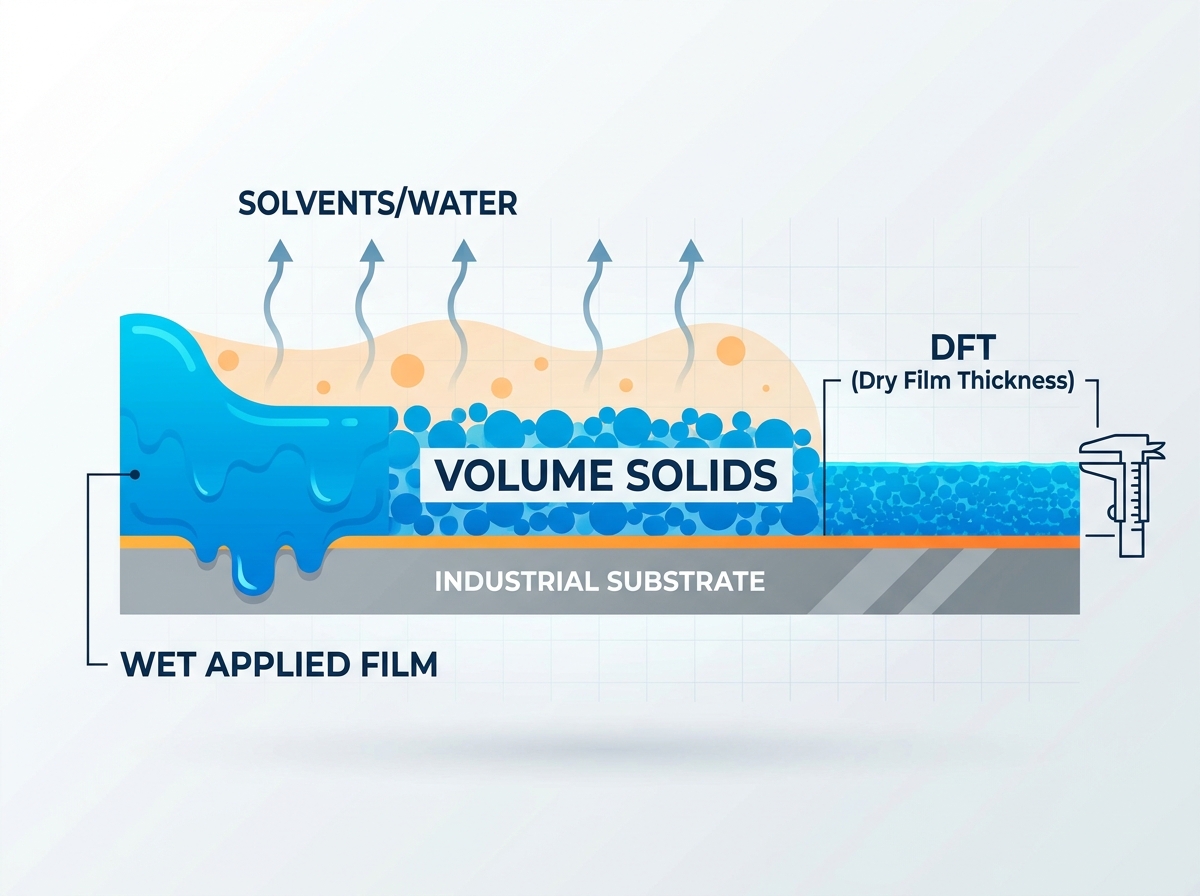
Next, you must prioritize volume solids during the evaluation phase. Many buyers continually confuse weight solids and volume solids. Volume solids represent the actual material left permanently on the wall after all solvents evaporate. This metric remains critical for accurately calculating true coverage rates. Higher volume solids mean fewer applied coats and significantly lower field labor costs. When sourcing Finished Paint, this specific data point directly dictates your final dry film build.
Dry film thickness (DFT) remains your most crucial on-site application metric. Establishing minimum and maximum mil thickness parameters is entirely non-negotiable. Over-application leads directly to solvent entrapment and severe surface cracking. Under-application leaves vulnerable substrates exposed to early rusting or rapid degradation. You must dictate a strict DFT range in every single specification document.
Resin Technology Application Matrix
| Resin Type | Primary Chemical Advantage | Ideal Substrate Environment | Common Mistake to Avoid |
| 100% Acrylics | High UV resistance and color retention. | Exterior commercial walls and masonry. | Applying in near-freezing temperatures. |
| Epoxies | Superior chemical and impact resistance. | Interior concrete floors and steel tanks. | Exposing directly to sunlight (causes chalking). |
| Polyurethanes | Excellent abrasion resistance and gloss retention. | High-traffic industrial topcoats. | Applying over improper or weak primers. |
![Commercial coating application and surface preparation on an industrial substrate]()
Substrate Compatibility and Environmental Constraints
Specialized physical substrates demand highly tailored formulation strategies. You cannot apply heavy industrial steel coatings directly to historic masonry. Historic preservation requires unique breathability features. Older bricks and mortars must release trapped moisture naturally into the air. Sealing them under heavy elastomeric layers destroys the wall from the inside out. You must specify highly vapor-permeable materials for aged buildings to prevent structural rot.
Conversely, industrial steel protection requires highly impermeable barrier coatings. These barriers stop galvanic corrosion before it starts. We evaluate bare substrate conditions closely before writing a single specification line. Checking the concrete pH levels and testing for retained moisture dictates the required primer technology.
Micro-climates aggressively attack external protective layers daily. You must evaluate chemical formulations against your local environmental extremes. Coastal facilities endure constant, punishing salt-fog exposure. You need specific marine-grade resistance profiles here to prevent immediate rust bleed-through. High desert environments blast surfaces under intense UV indices daily. They require advanced acrylic formulations to prevent rapid chalking and fading.
Northern regions experience brutal freeze-thaw cycles every single winter. Your chosen material must flex dynamically without fracturing under extreme cold. Application environment limits heavily influence your initial field success. Specifications must define acceptable ambient temperature ranges during application. They must also dictate strict relative humidity limits during the chemical curing process. Curing outside these windows guarantees immediate adhesion failure.
Compliance, Safety, and Regulatory Standards
Environmental regulations continuously reshape the industrial coating landscape. You must navigate regional Volatile Organic Compound (VOC) limits carefully. Different states, provinces, and municipalities enforce completely different threshold standards. You must specify compliant formulations without sacrificing long-term durability. Modern low-VOC technologies perform exceptionally well, but you must verify their empirical performance data first.
Integrating industry consensus standards elevates your procurement documents immediately. Rely on established professional frameworks to guide your technical requirements. The Association for Materials Protection and Performance (AMPP) provides definitive, unbiased guidelines. Referencing these robust documents shifts liability safely away from your organization.
Here are the core standards you should integrate into your specifications:
- SSPC-SP 1: Mandate this for strict pre-cleaning and aggressive solvent wiping before any mechanical prep begins.
- SSPC-SP 6: Require this standard for commercial blast cleaning on all structural steel surfaces.
- ASTM D3359: Use this exact protocol for verifying cross-hatch adhesion after the curing cycle finishes.
- AMPP Guidelines: Implement these procedures for managing dangerous chloride contamination limits on bare metal substrates.
- EPA Method 24: Demand this specific testing method for validating vendor-reported VOC emission levels.
Green building certifications drive many modern institutional procurement mandates. Choosing highly compliant materials can contribute significantly to your overall LEED certification points. Government and large institutional projects often mandate these specific environmental profiles by law. You must align your technical data sheets to meet these exact institutional requirements perfectly.
Performance Testing and Vendor Acceptance Criteria
Marketing brochures mean absolutely nothing without empirical laboratory data. Standardized durability metrics provide the only reliable vendor baseline available. You must require independent ASTM testing data for every proposed material. Scrub resistance testing validates how well finished surfaces handle aggressive physical cleaning routines. Cross-hatch adhesion data proves the protective layer bonds tightly to the specified substrate.
Accelerated weathering tests simulate years of harsh exterior exposure in just a few short weeks. Gloss and color retention also require highly measurable thresholds. You must establish concrete performance expectations over a demanding five-to-ten-year horizon. Specify acceptable Delta-E color shift limits to prevent rapid fading. Demand specialized UV degradation testing results from every bidding supplier.
If a vendor cannot quickly provide this historical testing data, disqualify them immediately. Service Level Agreements (SLAs) bind the chosen contractor directly to your expectations. You must define exact acceptance criteria long before the physical project begins.
Establish mandatory inspection hold points throughout the entire application process. An independent inspector must verify surface prep before any actual coating begins. They must routinely verify wet film thickness (WFT) during active application. They must also verify the final dry film thickness (DFT) before final sign-off. These strict warranty prerequisites guarantee you get exactly what you specified.
Performance Verification Chart
| Testing Standard | Metric Evaluated | Common Acceptance Baseline |
| ASTM D2486 | Scrub Resistance | Greater than 400 cycles without film failure. |
| ASTM D3359 | Cross-Hatch Adhesion | Rating of 4B or 5B on prepared steel. |
| ASTM B117 | Salt Spray (Fog) Exposure | No blistering or rusting after 1,000 hours. |
| ASTM D4587 | Accelerated UV Weathering | Minimal gloss loss after 500 hours QUV. |
Implementation Risks and Shortlisting Logic
The most advanced chemical formulation will still fail entirely on a poorly prepared surface. This remains a very harsh implementation reality across all job sites. Premium Finished Paint cannot ever compensate for substandard substrate preparation. Leftover grease, dirt, and loose mill scale destroy chemical adhesion instantly. Your written specifications must address this surface prep dependency explicitly and aggressively.
Evaluating ongoing vendor support is just as important as evaluating the physical product itself. You should shortlist major manufacturers based heavily on their technical field support capabilities. Will they readily provide site-specific Technical Data Sheets (TDS) upon request? Will they send certified technical representatives directly to your active job site? The best manufacturers offer customized specification writing assistance at no extra charge.
They help you tailor specific parameters to your exact facility layout and environment. Your next crucial step is building a highly standardized bid sheet. This document strictly forces all suppliers to compete on identical technical specifications. Do not let vendors bid based on their proprietary brand names or vague marketing claims.
Require them to match your mandated volume solids, exact resin types, and strict VOC limits. This logic strips away marketing noise and reveals true product value immediately. It ensures your procurement dollars secure genuine protective assets rather than empty promises.
Conclusion
Structuring a technical specification around strictly measurable data remains the only reliable way to protect structural assets. Hard metrics like volume solids, ASTM testing protocols, and regional VOC limits form the absolute backbone of a successful procurement strategy. When you enforce these rigid parameters, you successfully protect vital facility budgets and prevent early asset failure.
- Audit the specific environmental demands and micro-climates of your site immediately before sourcing.
- Construct your technical requirements backward from those exact physical realities rather than starting with a budget figure.
- Mandate strict hold-point inspections to continuously verify surface preparation and film thickness during application.
- Disqualify any contractor unwilling to strictly adopt your standardized technical bid sheet.
FAQ
Q: What is the difference between volume solids and weight solids in finished paint?
A: Volume solids indicate the actual amount of paint left on the surface after drying, directly impacting DFT and coverage. Weight solids include heavy pigments that may not contribute to film build. Specify by volume for accuracy.
Q: How do I specify finished paint for historic or aged buildings?
A: Historic structures require highly vapor-permeable (breathable) coatings like mineral or specialized acrylic paints to prevent moisture entrapment, which destroys old masonry and wood.
Q: Can I rely entirely on the manufacturer's warranty when sourcing paint?
A: No. Most commercial warranties stipulate strict surface preparation and application conditions. If your specification doesn't mandate these exact conditions, the warranty is easily voided.
Q: Why is Dry Film Thickness (DFT) a necessary specification?
A: DFT provides a measurable, objective standard for inspectors to verify that the contractor applied the finished paint at the required thickness to achieve the promised durability.