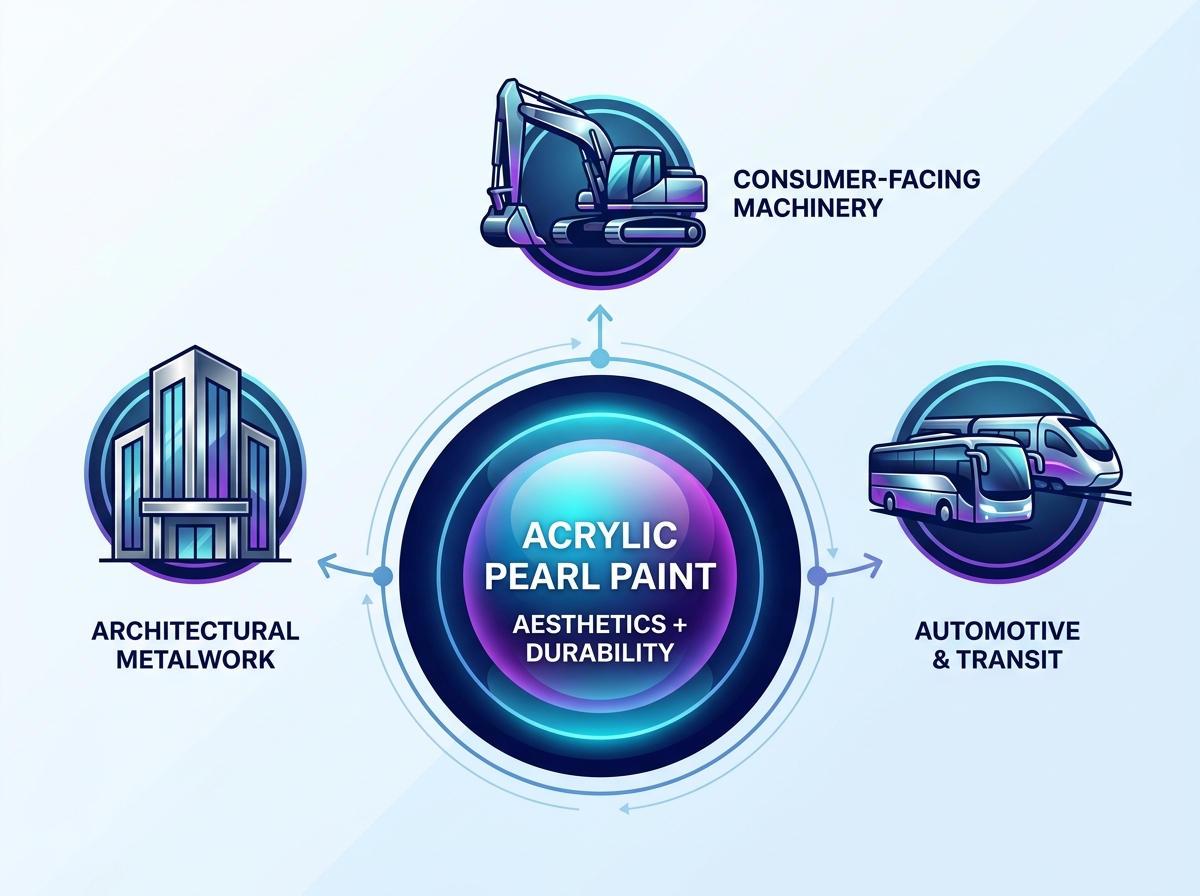
Industrial buyers face a difficult dilemma today. You need a premium, brand-differentiating aesthetic for your high-value assets. Yet, you absolutely cannot sacrifice environmental resistance or daily operational efficiency to achieve it. Standard decorative coatings often fail rapidly under harsh manufacturing or outdoor conditions. We define industrial-grade Acrylic pearl paint not as a simple decorative afterthought, but as a functional, high-performance barrier. Chemists engineer these specific formulations to meet rigorous durability requirements while delivering dynamic visual appeal.
Technical specifiers must carefully evaluate coating options based on verifiable performance data rather than marketing claims. This comprehensive guide shows you exactly how to determine if an acrylic pearl system fits your exact manufacturing or architectural project. You will learn how to navigate technical data sheets, compare formulation alternatives, and mitigate common application risks effectively.
Key Takeaways
- Strategic Fit: Acrylic pearl paint bridges the gap between high-end visual appeal and industrial-grade UV and weather resistance.
- Prime Applications: Delivers maximum ROI in architectural metalwork, consumer-facing heavy machinery, and specialized transit components.
- Evaluation Focus: Success depends on validating Technical Data Sheet (TDS) claims regarding Direct-To-Metal (DTM) adhesion, cure times, and long-term gloss retention.
- Risk Mitigation: Proper surface preparation and controlled application environments are mandatory to prevent early-stage coating failure or "softness" issues.
The Business Case: Balancing Aesthetics with Industrial Durability
Facility managers and product engineers often hit a wall during the specification process. Traditional industrial epoxies provide excellent chemical resistance and hardness. However, they chalk heavily under prolonged UV exposure. Your assets lose their gloss and color fidelity within months outdoors. On the other end of the spectrum, high-end aliphatic polyurethanes resist weather beautifully. Yet, they present significant toxicity hurdles. They often require specialized breathing apparatus for applicators. They also carry a premium price tag.
Industrial acrylic pearl coatings offer a highly effective middle ground. They deliver excellent color and gloss retention. You get reliable UV stability without the intense application risks of isocyanate-driven polyurethanes. They boast a lower toxicity profile. Paint crews appreciate the faster touch-dry times, which keeps production lines moving seamlessly. The suspended mica particles create a dynamic, light-reflecting finish. This effect elevates the visual standard of rugged equipment.
You define project success through tangible metrics. A successful coating strategy reduces long-term maintenance cycles. It enhances the end-user brand perception on the showroom floor. It ensures compliant, safe application processes within your factory. By migrating to a modern acrylic system, you achieve a premium finish. You also maintain the rugged durability your environment demands.
![Industrial application of acrylic pearl paint on machinery]()
High-Yield Applications for Acrylic Pearl Paint
Not every asset requires a dynamic finish. However, certain sectors see a massive return on investment when upgrading their coating specifications. Let us explore the primary areas where this formulation excels.
Architectural Metalwork & Exterior Facades
Architects increasingly specify pearl finishes for structural steel, aluminum mullions, and exterior metal panels. Superior UV resistance makes this formulation ideal here. It prevents the delicate pearl effect from degrading or yellowing in harsh outdoor environments. Standard paints often look flat or chalky after two years of sun exposure. In contrast, Acrylic pearl paint maintains its reflective depth.
The outcome is long-term aesthetic consistency. Buildings retain their intended design language. Property owners avoid costly repainting cycles. They enjoy a facade that actively reflects changing daylight.
Consumer-Facing Machinery & OEM Equipment
Heavy machinery no longer needs to look purely utilitarian. Original Equipment Manufacturers (OEMs) use premium finishes to stand out. Think of high-end agricultural tractors, compact excavators, or warehouse robotics. Providing a distinct, premium finish differentiates equipment on the showroom floor. It also performs reliably on the job site. The acrylic matrix resists operational chemical exposure like hydraulic fluid spills or mild solvents.
This strategy directly increases perceived product value. Buyers associate a flawless, complex finish with superior internal engineering. It boosts brand recognition instantly.
Automotive & Transit Components
Municipal transit fleets and specialized automotive builds require unique solutions. They need paints that balance impact resistance with complex, light-reflecting visual properties. Modern transit authorities want their buses and light rail cars to look modern and clean. Acrylic pearls reflect light, making large flat panels look sleeker.
Using this system streamlines touch-ups. Acrylics blend more easily during spot repairs than rigid two-part polyurethanes. Transit authorities maintain consistent fleet branding while keeping maintenance schedules tight.
Technical Evaluation: Comparing Formulations and Alternatives
You must evaluate coatings objectively. We need to compare the acrylic pearl framework against legacy systems. This helps specifiers understand the trade-offs.
Standard epoxies carry chalking risks. They break down at the molecular level under sunlight. Polyurethanes offer great protection but introduce application complexity. Acrylic pearl systems use a thermoplastic or thermosetting acrylic resin base. This base inherently resists UV degradation. The mica pigments integrate smoothly into this resin.
Coating Performance Comparison Chart
| Coating Type | UV Resistance | Toxicity Profile | Cure Speed (Touch-Dry) | Visual Aesthetics |
| Standard Epoxy | Poor (Chalks) | Moderate | Slow to Medium | Flat / High Gloss only |
| Polyurethane | Excellent | High (Isocyanates) | Medium | High Gloss / Solid |
| Acrylic Pearl | Excellent | Low to Moderate | Fast | Dynamic / Reflective |
Viscosity & Seamless Application
Achieving a flawless pearl finish requires precise flow characteristics. You must assess the paint viscosity carefully. If the paint is too thin, the heavy pearl pigments sink to the bottom of the film. This causes a loss of the shimmering effect. If it is too thick, you risk poor flow-out. This leads to an orange-peel texture. You want a formulation engineered to achieve a uniform pearl suspension. This prevents mottling or tiger-striping across large panels.
The DTM (Direct-To-Metal) Debate
Many vendors market their acrylics as Direct-To-Metal (DTM). We must evaluate these claims critically. While DTM acrylics adhere well to clean steel, they often exhibit early-stage "softness." The film feels dry to the touch rapidly. However, full chemical cross-linking takes longer. Specifiers must understand the difference between dry-to-handle timelines and full-cure timelines. Moving a heavy steel beam before the paint achieves full chemical cure leads to gouging. For severe industrial environments, pairing an acrylic topcoat with a dedicated epoxy primer remains the safest path.
Implementation Realities & Risk Mitigation
Even the best formulation fails if applied incorrectly. Controlling the application environment guarantees success. You must enforce strict protocols on the shop floor.
Surface Preparation Mandates
We must move beyond basic solvent cleaning. Mechanical adhesion is non-negotiable for industrial durability. You need to detail specific abrasive blasting profiles. For instance, requiring an SSPC-SP6 (Commercial Blast) or SSPC-SP10 (Near-White Blast) creates the necessary anchor profile. The microscopic peaks and valleys on the metal allow the acrylic resin to lock in tightly. If blasting is impossible, you must specify aggressive chemical etching. Smooth, untreated metal will reject the coating over time.
Environmental Controls
Ambient conditions drastically affect paint behavior. You must manage the impact of ambient temperature and relative humidity. These factors control the flash-off time of waterborne or solvent-based acrylic pearls. High humidity traps moisture in the film. This causes a cloudy appearance, known as blushing. Low temperatures slow the evaporation of solvents. This extends the vulnerable "soft" phase of the coating. Always apply these coatings at least five degrees above the dew point.
Application Techniques
Pearl paints demand specific spray equipment requirements. You cannot simply brush or roll them. Doing so ruins the orientation of the mica flakes.
- HVLP (High Volume Low Pressure): This system offers maximum control. It lays the pearl flakes down flat, maximizing light reflection. It is ideal for complex geometries.
- Airless Sprayers: Airless systems work well for massive surface areas. However, you must select the correct tip size. Pushing pearl paint through a tiny tip can shear the delicate mica pigments. This destroys the visual effect.
- Agitation: Applicators must use mechanical agitators in their paint pots. Pearl pigments settle quickly. Constant mild agitation keeps them suspended uniformly.
Best Practices and Common Mistakes
Best Practices:
- Always verify the dew point before opening paint cans.
- Use a 50% overlap technique when spraying to prevent striping.
- Apply a compatible clear coat if the asset faces extreme abrasion.
Common Mistakes:
- Rushing the flash-off time between coats, leading to solvent pop.
- Ignoring the manufacturer's recommended fluid-to-air pressure ratios.
- Skipping the abrasive blasting step on newly fabricated steel.
Shortlisting Logic & Procurement Next Steps
Sourcing the right industrial acrylic requires due diligence. You must push past marketing brochures and examine the raw data. This shortlisting logic protects your investment.
Interrogating the TDS
Demand specific key metrics from your coating vendors. Scrutinize the Technical Data Sheet. Look for ASTM D3359 cross-hatch adhesion results. You want a rating of 4B or 5B. Check the ASTM B117 salt spray hours. A robust industrial acrylic should withstand hundreds of hours without creeping rust at the scribe. Finally, verify the precise volume solids. Higher volume solids mean less solvent evaporates away. You get more actual film build per gallon.
Pilot Testing
Never roll out a new coating globally without a trial. Structure a controlled mock-up phase. Paint a test panel or a single piece of equipment. Verify the finish consistency under your actual factory lighting. Measure the actual facility cure times, as they often differ from lab environments. Use a wet film thickness (WFT) gauge during application. Follow up with a dry film thickness (DFT) gauge to ensure proper mil build-up. This confirms the paint provides the barrier protection promised.
Vendor Vetting
Assess the manufacturer's support infrastructure. Industrial painting inevitably encounters hiccups. You need batch-to-batch color consistency guarantees. Pearl finishes are notoriously difficult to match if the factory changes pigment suppliers. Ask about their technical troubleshooting availability. Will they send a field engineer to your site if you experience adhesion failures? Reliable vendors partner with you; they do not just ship buckets.
Conclusion
Industrial acrylic pearl paint operates as a highly specialized tool. It proves incredibly effective for UV-exposed, high-visibility assets when applied under strict technical controls. It solves the chalking issues of traditional epoxies and the toxicity risks of polyurethanes. However, success requires rigorous surface preparation and precise application techniques. You cannot cut corners during the execution phase.
Take immediate action to validate this solution for your facility. First, request a draw-down sample batch from a reputable vendor for internal adhesion testing. Next, review your current abrasive blasting capabilities to ensure they meet the required profile standards. Finally, schedule a comprehensive technical review of your current coating specification with a qualified formulations engineer. These steps ensure your next project achieves both premium aesthetics and rugged durability.
FAQ
Q: How does the cure time of industrial acrylic pearl paint impact production staging?
A: The difference between touch-dry and full chemical cure is critical. Acrylics often feel dry to the touch within an hour. However, a full chemical cure can take several days. Moving or stacking painted parts too early leads to gouging and the "soft paint" failures commonly discussed in user forums. You must plan staging areas to accommodate the full cure timeline.
Q: Can acrylic pearl formulations be used reliably as a Direct-To-Metal (DTM) coating?
A: While functional DTM acrylics exist, they have limitations. They work well for mild indoor environments. For maximum corrosion resistance in severe or highly corrosive environments, applying a dedicated compatible epoxy primer first remains the safest industry standard.
Q: What causes the pearl effect to look uneven or striped on large industrial panels?
A: Uneven finishes stem directly from application errors. The most common culprits include an incorrect spray gun overlap pattern, improper fluid-to-air pressure ratios, or using the wrong spray tip. Furthermore, failing to keep the paint properly agitated allows the heavy pearl pigments to settle, causing inconsistent color distribution.
Q: How does the maintenance of an acrylic pearl finish differ from standard solid colors?
A: Pearl finishes rely heavily on light reflection. You must outline the need for non-abrasive cleaning protocols. Using harsh brushes or aggressive chemical solvents can scratch or dull the surface gloss. Maintaining the smooth outer layer is essential, as the surface gloss dictates how the underlying pearl particles reflect light.