Getting quotes for a vehicle transformation can be incredibly frustrating. One shop quotes $3,000, while another demands $15,000 for what sounds like the exact same request. This massive variance causes intense buyer anxiety. A true Custom color paint job is fundamentally different from standard collision repair. It also differs completely from high-volume production resprays. Those cheap quotes often hide shortcuts. These shortcuts will eventually ruin the final finish.
We will break down exactly where your money goes. You will learn the real ratio of labor to materials. We will also show you how to spot hidden risks before you commit to a shop. This evidence-based framework empowers you to evaluate quotes confidently. You will understand exactly what you are paying for. You will also learn why the lowest bid is rarely the best choice.
Key Takeaways
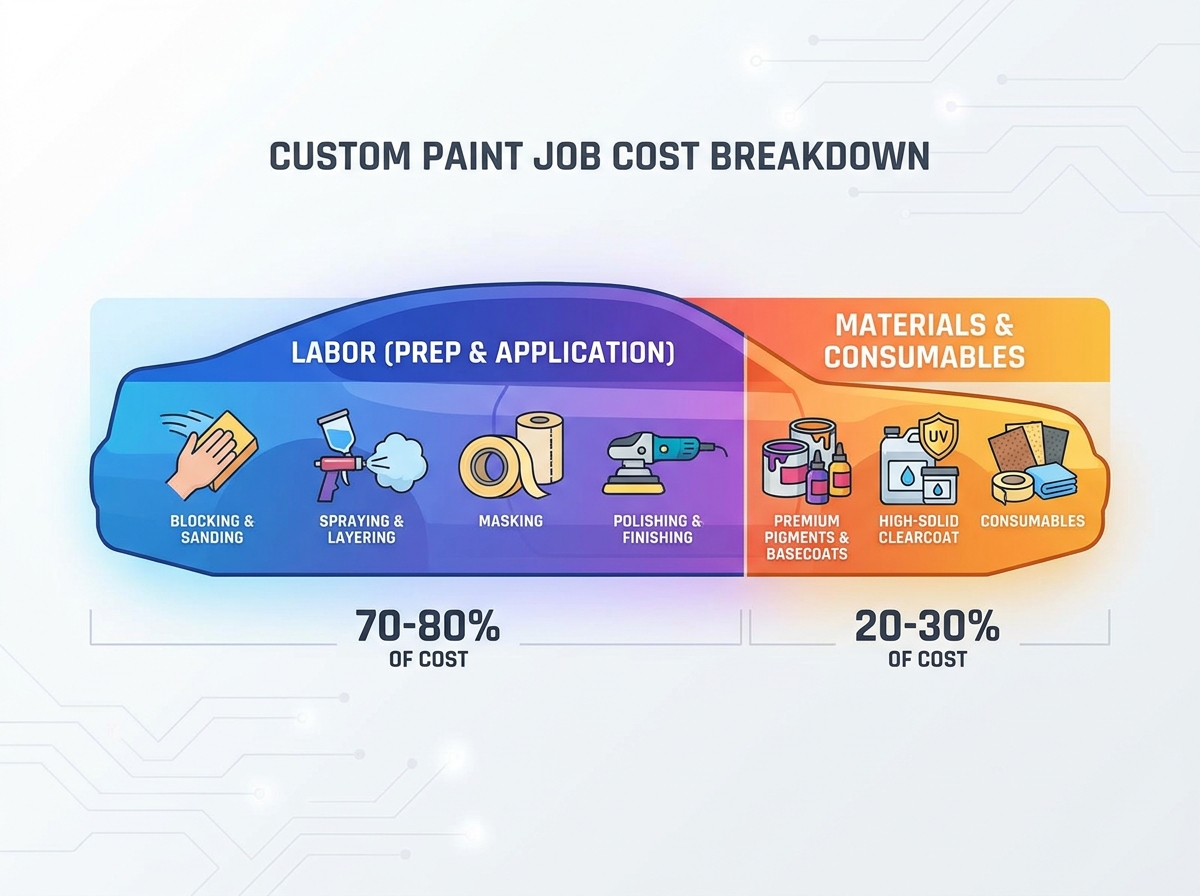
- Labor Outweighs Materials: 70–80% of a custom paint quote reflects intensive prep work, including stripping, blocking, and wet sanding, not just the liquid paint.
- Material Quality Varies Wildly: High-solid clearcoats and specialty pigments (pearls/flakes) drastically alter base costs; low-bid quotes typically cut corners here.
- Prep is the Hidden Variable: Pre-existing conditions (rust, previous bad repairs) invalidate base estimates and require contingent budget buffers.
- DIY Isn't Always Cheaper: Factoring in the acquisition of professional-grade tools, booth rentals, and material waste rates often closes the gap between DIY and professional pricing.
The Baseline: Why Custom Color Paint Defies Standard Pricing
Many buyers confuse a factory color-match with a ground-up custom project. They are entirely different services. Standard collision repair uses a "scuff and shoot" method. Technicians lightly sand the top layer of clearcoat. They spray the new color over the old base. They blend it into the adjacent panels. This process is fast. It requires minimal disassembly. It keeps costs low.
A true custom project requires a completely different approach. You cannot simply spray a new color over the old one. The scope of work expands dramatically. Technicians must disassemble the vehicle. They remove bumpers, trim, glass, and weatherstripping. They must paint the door jambs. They often paint the engine bay and trunk interior. If you skip these steps, the old color will show every time you open a door. This ruins the illusion of a premium finish.
We must also define the success criteria for a high-quality outcome. A premium finish has zero orange peel. Orange peel is a textured surface resembling citrus skin. A top-tier job looks like glass. It features perfect color depth. It offers long-term UV resistance. It shows absolutely no masking lines around the windows or trim.
You must understand the transparent assumptions behind baseline quotes. When a shop gives you a starting price, they assume the vehicle is perfect. They assume the panels are straight. They assume there are no dents. Reality rarely matches this assumption. Every ripple requires extra labor to fix. This is why standard pricing models fail in the custom world.
![Custom auto paint application in professional spray booth]()
The Anatomical Breakdown of a Custom Paint Job Quote
Understanding a quote requires breaking it into three parts. These parts are labor, materials, and consumables. Labor is always the largest expense.
Labor Hour Allocation (The 80% Rule)
Labor typically consumes 80% of your total budget. The liquid itself is a small fraction of the cost. The time sink begins with chemical stripping or media blasting. Technicians must remove decades of old material. Next comes primer blocking. Technicians spray a high-build primer. They sand it perfectly flat by hand. They use long sanding blocks. This process can take dozens of hours.
Masking takes significant time. Technicians must protect every exposed wire and glass edge. Spraying the car is surprisingly fast. The real work resumes after the booth. Technicians perform wet sanding. They use progressively finer sandpaper to flatten the clearcoat. Finally, they spend hours compounding and polishing the surface to a mirror shine.
The Math Behind Materials
Material costs are highly variable. Basecoats and pigments operate on a tier system. A standard metallic basecoat is relatively affordable. Tri-coat custom pearls and candies are vastly more expensive. A candy apple finish requires a metallic base, a translucent color coat, and a clear topcoat. This doubles the material cost instantly.
Clearcoat financials are complex. Premium shops use cost-modeling realities. They calculate mixing ratios and coverage rates. They also factor in expected waste and overspray percentages. High-solid clearcoats cost more upfront. However, they offer better UV protection. They also provide enough thickness to survive aggressive wet sanding. Cheap quotes use low-solid clears. These thin coatings fail under the sun within a few years.
Consumables
Buyers often ignore consumables. These items aggregate into hundreds of dollars per job. Shops must charge for these necessities. A single project consumes massive amounts of supplies.
- Sandpaper: Shops use dozens of sheets across various grit levels.
- Masking Tape and Paper: Premium automotive tape prevents bleed-through and leaves no residue.
- Tack Rags: These sticky cloths remove microscopic dust before spraying.
- Solvents: Cleaning guns and wiping down panels requires specialized, expensive chemicals.
Typical Cost Allocation Breakdown
| Expense Category | Estimated Percentage | Core Components |
| Labor (Prep & Bodywork) | 50% - 60% | Stripping, blocking, dent repair, masking |
| Labor (Post-Paint) | 15% - 20% | Wet sanding, compounding, polishing |
| Core Materials | 15% - 20% | Primer, basecoat, pearls/flakes, clearcoat |
| Consumables | 5% - 10% | Tape, paper, sandpaper, solvents, tack rags |
The Hidden Prep Costs: What Lies Beneath the Surface
Every custom project carries inherent risks. We call this the "Project Car" variable. You never truly know what hides under the surface. Stripping old layers frequently reveals nightmares. You might find past accident damage. You might uncover inches of cracking body filler. You will almost certainly find rust.
These discoveries invalidate the original estimate. A straight panel takes a few hours to prep. A rusted panel takes days. You must understand the different remediation processes available. Your choice drastically impacts the final bill.
- Localized Rust Repair: Technicians cut out small sections of rot. They weld in fresh metal patches. This is cost-effective for minor issues.
- Panel Replacement: Sometimes patching is impossible. Technicians must buy a new fender or door. They must align the new panel perfectly. This adds parts cost and fitment labor.
- Full Media Blasting: Severe cases require stripping the entire shell to bare metal. Shops use crushed glass or plastic beads. This is incredibly expensive. It provides the best possible foundation for new materials.
Risk mitigation is crucial. You must protect yourself financially. We advise buyers to establish a contingency budget. Keep 15% to 20% of the initial quote in reserve. Undiscovered metalwork requirements will consume this buffer quickly. If a shop promises a fixed price without seeing bare metal, they are lying. They will either demand more money later or hide the rust under new filler.
DIY vs. Professional Shop: Evaluating the True Trade-offs
Many enthusiasts experience sticker shock. They immediately consider tackling the job at home. You must evaluate the true trade-offs before making this decision. The gap between DIY and professional pricing is much smaller than you think.
The Capital Expenditure of DIY
You cannot achieve a premium finish with cheap tools. You must invest heavily in infrastructure. The capital expenditure of DIY ruins the perceived savings. You will need to purchase or rent several critical items.
- High-Capacity Air Compressors: Small garage compressors cannot keep up. You need a 60-gallon, two-stage compressor to maintain consistent pressure.
- HVLP Guns: High-Volume Low-Pressure guns are expensive. You need dedicated guns for primer, basecoat, and clearcoat.
- Moisture Traps: Any water in the airlines will ruin the finish. You must install industrial-grade desiccant systems.
- Proper Ventilation: Spraying dangerous chemicals requires a controlled environment. Booth rentals cost hundreds of dollars per day.
- PPE: Automotive chemicals contain isocyanates. You need a supplied-air respirator system to protect your lungs.
The Cost of Inexperience
Novices severely underestimate material waste rates. Pros mix exactly what they need. Beginners mix too much. They spray too heavy. They cause runs and sags. Fixing a run requires sanding it down and respraying. This burns through expensive basecoats and clearcoats rapidly. Material waste inflates DIY costs well beyond initial estimates.
Warranty and Liability
Contrast the lack of recourse in DIY with a professional shop. If you spray the car yourself and it peels in six months, you lose your investment. You must buy new supplies and start over. Professional shops provide warranties. They protect you against delamination, severe fading, or clearcoat failure. You are paying for peace of mind and accountability.
How to Evaluate a Quote and Spot Low-Bid Traps
Choosing the right shop requires careful analysis. You need a strict evaluation framework for comparing multiple estimates. Do not just look at the final number. Look at how the shop arrived at that number.
Skeptical Lenses to Apply
Read the written estimate line by line. Does the quote specify the brand and product line? Cheap shops use generic, low-tier products. Premium shops list recognizable, high-end brands. They specify the exact clearcoat series.
Check the labor breakdown. Are the labor hours for bodywork itemized separately? Bodywork and spraying are different skills. They should carry different line items.
Look for the finishing steps. Is wet sanding and compounding included? Many low-bid shops spray the clearcoat and return the car. The surface will look textured. Achieving a glass-like finish requires the "cut and buff" stage. If it is an add-on, the cheap quote suddenly becomes very expensive.
Identifying Red Flags
You must learn to identify common red flags. Warn yourself against shops offering rapid turnarounds. A true custom project takes weeks, not days. Proper chemical curing takes time. Rushing the process causes solvent pop and shrinkage.
Refuse to work with shops that brush off prep work. If a manager says, "We can just spray over that rust," walk away immediately. Additionally, avoid any business refusing to provide a detailed written breakdown. Handshake deals end in lawsuits.
Next-Step Actions
Take actionable steps to verify the shop's quality. Request a localized estimate. Ask them to prep and shoot a single test panel first. Ask for a portfolio of aging custom jobs. Anyone can make a car look good fresh out of the booth. You want to see a vehicle they sprayed five years ago. Check if the clearcoat is still glossy. Finally, always confirm warranty terms in writing before handing over your keys.
Conclusion
A custom vehicle transformation is a massive investment. You are paying for intensive manual labor and high-end chemical engineering. Understanding the breakdown of costs protects you from predatory pricing. It also protects you from cheap, catastrophic shortcuts.
Opting for the lowest bid usually guarantees paying twice. You pay once for the cheap job. You pay again to have a real professional strip it down and redo it properly. The hidden costs of poor prep work will always surface eventually.
Equip yourself with these insights. Confidently approach specialized autobody shops with a realistic budget. Ask the right qualifying questions. Demand transparency regarding materials and labor hours. By doing so, you ensure your investment results in a flawless, durable finish.
FAQ
Q: How much should a high-quality custom color paint job cost on average?
A: A daily driver quality respray typically costs between $4,000 and $7,000. A show-car finish, requiring extensive block sanding, premium pearls, and flawless wet sanding, ranges from $10,000 to $20,000+. The final price depends heavily on the vehicle's starting condition.
Q: Does changing the vehicle's color cost more than repainting it the same color?
A: Yes, it costs significantly more. Changing the color requires disassembling the vehicle to paint the door jambs, under the hood, and inside the trunk. This adds dozens of labor hours compared to simply respraying the exterior panels in the original hue.
Q: Why is the clearcoat considered one of the most expensive material aspects?
A: Premium clearcoats use high-solid formulas. They provide critical UV protection to prevent fading. High-solid clears are more expensive but leave a thicker resin layer on the car. This thickness is absolutely necessary to survive the aggressive wet sanding required for a glass-like finish.
Q: How long does a true custom paint job take to complete?
A: Expect a timeline of 4 to 8 weeks for a full custom project. Proper bodywork takes time. Primers and clearcoats need adequate curing phases between steps to prevent shrinking. Most reputable shops also have a backlog, so book well in advance.