Staring at the hardware store shelves, you face a tough decision. Should you grab a cheap, standard gallon of paint, or invest in a specialty tin promising a flawless finish? You want your project to look great. More importantly, you want it to last. Specialty formulas often market themselves as miraculous solutions. They promise supreme durability or zero prep time. These claims tempt DIYers and professionals alike. However, these formulas bring higher upfront costs. They also demand strict application rules and complicated curing requirements.
In this guide, we break down the reality behind the marketing hype. We provide an objective, evidence-based comparison between specialty coatings and traditional architectural paints. You will discover exactly which option fits your specific durability needs. We also cover application constraints, budget limits, and project suitability. By the end, you will know exactly how to match the right chemistry to your exact surface.
Key Takeaways
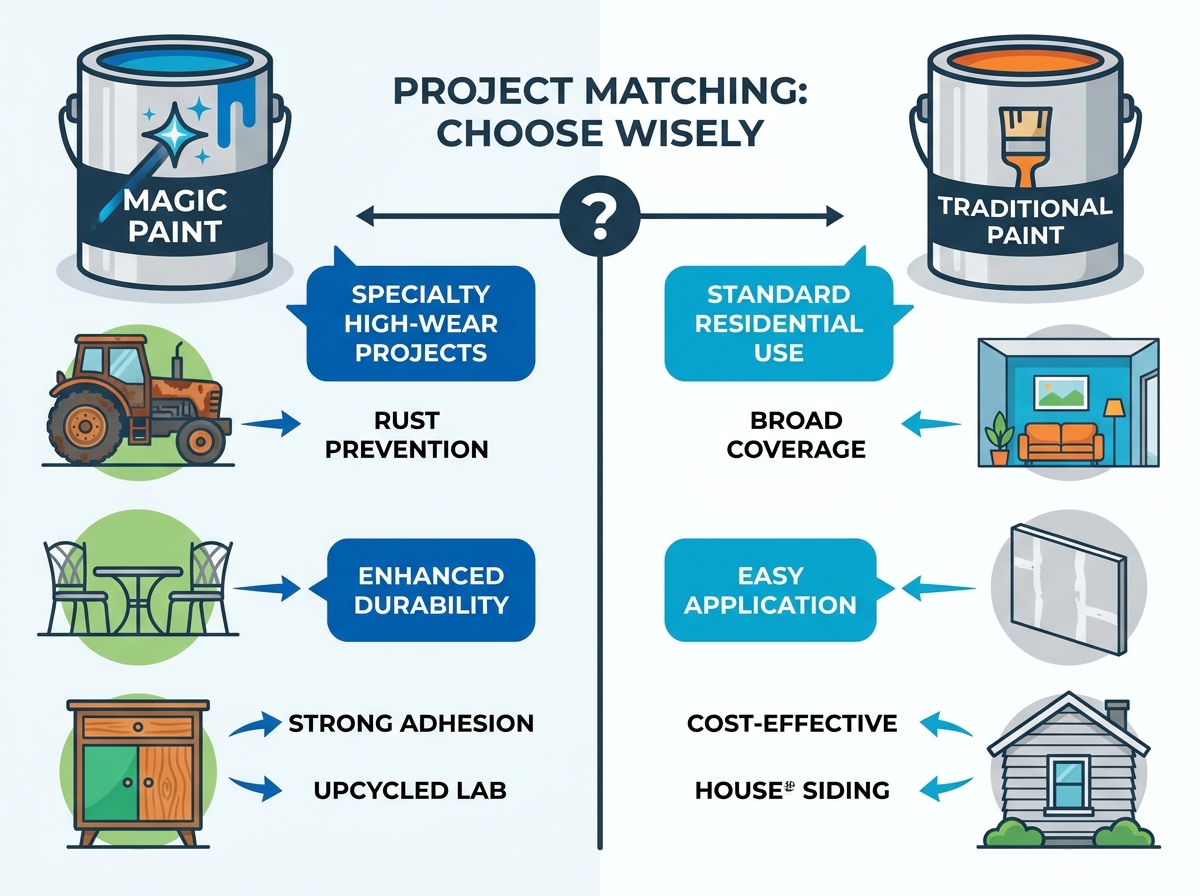
- Project Matching: "Magic Paint" excels in high-wear specialty projects (farm equipment, upcycled furniture) where traditional latex or acrylic fails, but it is overkill for standard drywall or low-impact surfaces.
- The "No-Prep" Reality Check: While many magic/specialty paints claim to eliminate sanding or priming, real-world longevity still relies on proper surface degreasing and basic preparation.
- Curing vs. Drying: Specialty enamels and one-step paints require longer curing times (sometimes weeks) for maximum hardness, whereas traditional paints offer faster return-to-service.
- Cost vs. Value: Traditional paint is cheaper per gallon, but Magic Paint can reduce overall project costs by eliminating the need for separate primers, sealers, or frequent touch-ups.
What is "Magic Paint" vs. Traditional Paint?
Understanding paint chemistry helps you avoid disastrous project failures. The market classifies coatings based on their intended substrate and chemical formulation. Let us define the two main categories competing for your budget.
Defining "Magic Paint" in the Market
The term encompasses highly engineered specialty coatings. It generally falls into two distinct contexts.
Context 1 (Heavy Equipment): You will find these enamel-based, rust-preventative paints at agricultural retailers. People often use them for restoring tractors, outdoor machinery, and heavy metal implements. They contain specific resins designed to cross-link and harden. Using a high-quality Magic Paint on a trailer ensures maximum protection against harsh elements.
Context 2 (DIY & Furniture): In the crafting world, this refers to chalk-style, one-step, or mineral blends. Brands market them as miraculous. They claim these formulas adhere directly to varnished wood. They appeal to refinishers who want to skip heavy sanding.
Defining Traditional Paint
Traditional paints include standard water-based latex or oil-based architectural coatings. Manufacturers design them for residential and commercial structures. You apply them to drywall, standard trim, and exterior wood siding. They offer broad, porous coverage. They remain relatively affordable and easy to source.
The Core Difference
Traditional paints prioritize ease of use and broad surface coverage. They go on smoothly with a roller. You can clean them up quickly using soap and water. Conversely, specialty formulas prioritize extreme performance. Chemists engineer them for high adhesion and self-leveling capabilities. They withstand extreme weather or chemical exposure. Standard architectural latex simply cannot match this level of environmental resistance.
![Comparing paint durability on metal and wood surfaces]()
Performance and Durability: Evaluating the Outcomes
Your project’s lifespan depends entirely on the coating's physical properties. Evaluating performance means looking at how the paint reacts to physical stress, sunlight, and moisture.
Scratch and Impact Resistance
Specialty coatings form a hardened shell. When you catalyze equipment enamels using a hardener, the chemical reaction creates a rigid barrier. This barrier aggressively resists chipping from gravel or heavy impact. Standard traditional paint remains flexible after drying. This flexibility helps architectural latex expand on wood siding. However, it makes traditional paint susceptible to peeling. If you apply standard latex to high-traffic metal, it will quickly scratch away.
UV Resistance and Color Retention
Sunlight destroys poorly matched coatings. Standard traditional exterior paint excels here. It contains excellent UV blockers designed to protect home exteriors for decades. Fading remains minimal. Some specialty enamels, however, may oxidize. If left exposed without a protective clear coat, equipment paint can chalk over time. Always check the manufacturer's UV ratings before painting outdoor machinery.
Rust and Moisture Barriers
Metal surfaces require strict moisture management. Traditional latex paint is breathable. It allows moisture vapor to pass through the film. On a metal surface, this breathable nature traps moisture against the substrate. This trapped moisture quickly leads to flash rust. Specialty equipment paints behave differently. They encapsulate the metal entirely. This solid, non-porous barrier prevents oxidation and blocks rust formation permanently.
| Performance Metric | Specialty Formulas | Traditional Latex |
| Impact Resistance | Excellent (Forms a hard shell) | Poor (Remains soft/flexible) |
| Adhesion to Metal | High (Chemically bonds) | Low (Prone to peeling) |
| Rust Prevention | Superior (Encapsulates surface) | Very Poor (Traps moisture) |
Application Realities: Prep Work, Tools, and Curing Time
Marketing campaigns often obscure the messy reality of painting. Achieving a flawless finish requires understanding surface prep, selecting the right tools, and respecting chemical cure times.
The Surface Prep Myth
Many furniture paints boast "no sanding, no priming" on their labels. You must approach these claims cautiously. Skipping heavy sanding saves time, but you cannot skip cleaning. Proper adhesion requires a completely grease-free surface. If you ignore this step, even the best Magic Paint will eventually peel.
To ensure true adhesion, follow these mandatory prep steps:
- Remove all hardware from the furniture or equipment.
- Scrub the entire surface using a strong degreaser (like TSP).
- Rinse the surface thoroughly using clean water.
- Allow the substrate to dry completely before applying any coating.
Application Methods (Spray vs. Brush)
Traditional paint forgives sloppy application. You can slather it on using a cheap roller. It hides brush marks fairly well on drywall. Specialty paints demand precision. Equipment enamels often require exact thinning ratios. Achieving a factory-smooth finish usually requires an HVLP (High Volume Low Pressure) sprayer. This introduces a distinct learning curve for beginners. You must manage air pressure, fluid flow, and overlap techniques carefully.
Drying vs. Curing Framework
People often confuse drying with curing. This mistake ruins many projects. Traditional latex dries to the touch in under two hours. You can safely handle the painted object within 24 hours.
Specialty formulas undergo a complex chemical cross-linking process. While an enamel might feel dry in an afternoon, it remains chemically soft. Full curing takes anywhere from 7 to 30 days. If you place heavy items on an uncured cabinet, the paint will indent and scratch.
Cost Analysis and Scalability
Evaluating project budgets means looking beyond the price tag on the shelf. You must calculate hidden implementation requirements and long-term durability.
Upfront Cost per Gallon/Quart
Traditional architectural paint wins on sheer volume. You can buy a premium gallon of interior latex for a fraction of the cost of specialty enamels. If you need to cover a massive warehouse wall, traditional paint provides the necessary scale and budget efficiency.
Hidden Implementation Costs
The upfront price rarely tells the whole story. Let us look at the hidden costs associated with each option.
- Traditional Paint Needs: You often must buy separate bonding primers. You need sandpaper to scuff glossy surfaces. You might also need expensive clear topcoats to protect a fragile latex finish.
- Specialty Paint Needs: Enamels demand proprietary chemical hardeners. You must purchase specific reducers or thinners. You may also need to rent or buy an HVLP spraying system.
Long-Term ROI
Calculate the cost of failure. Imagine painting a steel tractor using standard house paint. It might look good for a week. However, the first rock strike will chip the latex. Moisture will penetrate the crack. Rust will spread beneath the film. Within six months, the tractor will peel aggressively. You will waste days stripping the failed coating. Investing in a proper formula initially saves you immense labor later. Doing the job right the first time guarantees a better return on your investment.
Decision Framework: Shortlisting the Right Paint for Your Project
Choosing the correct coating eliminates frustration. Use this framework to match the specific chemistry to your upcoming project.
When to Choose Magic Paint (Equipment/Metal)
Select heavy-duty enamels when restoring tractors, agricultural implements, or utility trailers. You also need these formulas for outdoor metal furniture. In these scenarios, rust prevention remains non-negotiable. The impact resistance provided by a catalyzed hardener ensures the metal survives harsh daily abuse.
When to Choose Magic Paint (Furniture/Cabinets)
Opt for one-step mineral or chalk-style coatings when upcycling vintage furniture. If you have a high-gloss veneer piece, aggressive sanding risks destroying the thin wood layer. A specialty bonding paint adheres safely. Furthermore, these formulas work beautifully if you desire a specific distressed, vintage, or ultra-matte aesthetic.
When to Choose Traditional Paint
Stick to standard architectural latex for residential interiors. Use it on drywall, ceilings, and standard baseboards. Rely on traditional exterior acrylics for wood siding and fences. In these environments, scalability matters most. Budget constraints and fast drying times drive the project's success. Traditional formulas handle these low-impact scenarios perfectly.
Next Steps: Testing Adhesion
Always test your chosen product before committing to a massive project. Professional painters rely on the cross-hatch adhesion test. Brush a small square of your chosen coating onto an inconspicuous area. Wait 48 hours. Score a small grid into the paint using a razor blade. Press a piece of strong tape over the grid, then rip it off. If the paint pulls away, your surface requires a stronger primer or better degreasing.
Conclusion
There is no "one size fits all" paint solution. The magic you seek depends entirely on matching the proper chemical formulation to your project's specific demands. Applying standard house paint to a steel trailer guarantees failure. Conversely, spraying expensive tractor enamel onto interior drywall wastes money and time.
Base your final purchase decision on the substrate material. Differentiate between porous raw wood, sleek finished veneer, and rust-prone metal. Evaluate the expected daily wear-and-tear realistically. Ignore flashy marketing claims on the tin. Instead, trust the chemical properties. By following basic preparation rules and respecting cure times, you guarantee a flawless, long-lasting finish for any project.
FAQ
Q: Do I really need to use a hardener with Majic tractor paint?
A: Yes. While enamel will dry eventually without it, a hardener forces a chemical cross-linking process. This reaction drastically reduces curing time. It also maximizes impact resistance, ensuring the paint creates a rigid shell that prevents chipping and scratching.
Q: Can I use traditional exterior paint on a metal trailer or tractor?
A: No. Traditional exterior paint remains porous and breathable. It traps moisture directly against the metal surface, accelerating rust formation. Furthermore, latex stays flexible and soft, making it highly susceptible to peeling and scratching on high-wear metal surfaces.
Q: Does "no-prep" magic furniture paint actually require zero preparation?
A: No. "No-prep" simply means you can skip aggressive sanding on previously varnished pieces. However, you absolutely must clean the piece thoroughly. Using a degreaser like TSP removes unseen hand oils and furniture polish. Without degreasing, no paint will adhere properly.
Q: Why is my specialty paint scratching off easily after 24 hours?
A: Your paint is dry to the touch, but it is not chemically cured. Evaporation makes the surface feel dry quickly. However, the chemical hardening process takes anywhere from 7 to 30 days. Treat the painted surface gently until the full cure cycle completes.