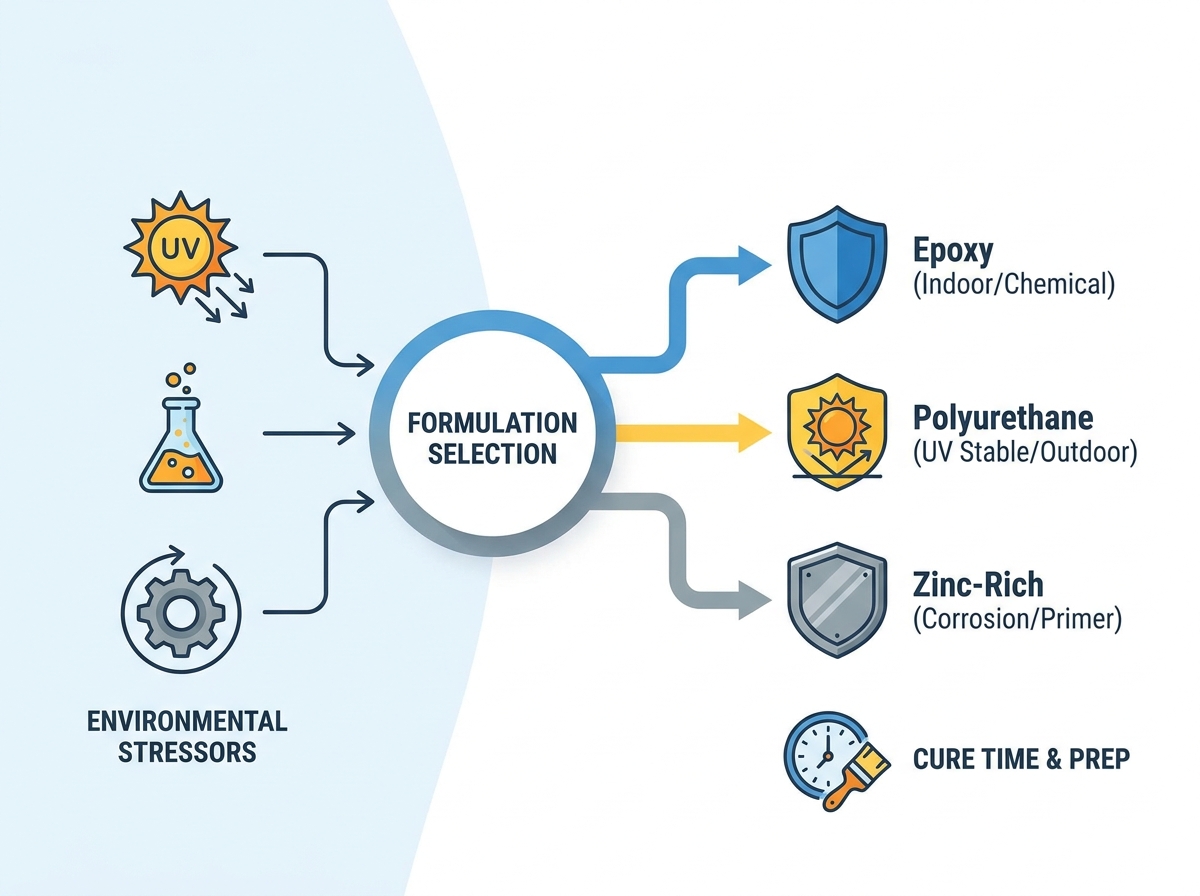
Industrial paint selection operates as a critical asset protection and risk management decision. You must never view it as merely an aesthetic final step. Industrial environments aggressively attack infrastructure. Corrosion and wear constantly threaten your valuable operational assets. Using the wrong Finished Paint often leads to premature coating failure. These failures trigger expensive facility downtime and operational bottlenecks. Poor coating choices also risk serious environmental and safety compliance violations.
We provide a clear, vendor-neutral framework to guide your next industrial coating project. You will learn to accurately evaluate specific environmental demands and substrate conditions. We explore formulation trade-offs between various chemical compositions. Finally, we break down essential regulatory compliance requirements. This comprehensive approach guarantees a resilient, long-lasting protective barrier for your facility.
Key Takeaways
- Selecting finished paint requires matching the chemical formulation (e.g., epoxy vs. polyurethane) directly to environmental stressors (UV, chemicals, abrasion).
- Surface preparation and cure times are often the biggest hidden drivers of project cost and facility downtime.
- Compliance with OSHA color standards and regional VOC limits must be integrated into the procurement process early.
- The most cost-effective finished paint is rarely the cheapest per gallon; true ROI is measured by maintenance cycles and application lifespan.
Evaluating Your Substrate and Environmental Extremes
Proper industrial coating always begins by analyzing the foundation. You cannot force a high-performance topcoat to perform over an incompatible base. Facility managers must conduct a thorough environmental audit before reviewing product data sheets.
Assess Base Materials
You must clearly define your specific substrate. Different materials demand unique adhesion mechanisms and primer compatibility. Carbon steel requires rigorous cleaning to create an anchor profile. Galvanized metal often needs specialized etching primers to prevent delamination. Concrete surfaces present moisture vapor transmission risks. You must measure concrete moisture levels before application. Existing architectural coatings also complicate matters. Applying strong industrial solvents over old alkyd paints often causes wrinkling. Always test adhesion compatibility on a small patch of the existing coating.
Map Environmental Stressors
Every industrial facility presents a unique combination of destructive forces. We categorize these stressors into three main domains:
- Chemical Exposure: Identify exact chemical contacts. Is the asset exposed to aggressive solvents, strong acids, or caustic alkalis? You must differentiate between occasional splashes and continuous immersion. Immersion environments require highly cross-linked polymer structures.
- Mechanical Wear: Estimate expected traffic volume and impact risk. Forklift traffic destroys standard floor paints quickly. High-abrasion areas demand specialized aggregates or polyaspartic formulations.
- Weather and UV Degradation: Differentiate between indoor controlled environments and severe outdoor exposures. Indoor facilities rarely need UV-resistant topcoats. Outdoor steel structures face relentless ultraviolet radiation and moisture. These outdoor assets require aliphatic topcoats to prevent rapid degradation.
Identify Operating Temperatures
Standard industrial coatings degrade rapidly under extreme heat. Account for continuous high-temperature operations near furnaces or boilers. Thermal shock presents an even greater danger. Rapid temperature drops cause metal substrates to contract suddenly. Rigid coatings will crack and flake off during these thermal shock events. Select flexible silicone-modified formulations for high-temperature zones. They accommodate rapid thermal expansion and contraction safely.
Comparing Primary Finished Paint Formulations
Chemical engineers design distinct formulations to solve specific industrial problems. No single coating serves as a universal solution. You must balance durability, cure times, and environmental resistance. Understanding these core chemistries prevents disastrous specification errors.
Industrial Epoxies
Epoxy systems dominate indoor heavy industry applications. They offer extreme durability and exceptional chemical resistance. Facility managers rely on epoxies for industrial floors, storage tanks, and heavy machinery.
- Best for: Indoor environments requiring maximum abrasion and chemical protection.
- Trade-offs: Epoxies chalk and fade quickly under direct sunlight. They require strict two-part mixing ratios. Incorrect mixing guarantees complete curing failure.
Polyurethanes
Polyurethane coatings excel in exterior environments. They serve perfectly as protective topcoats over zinc or epoxy primers. Aliphatic polyurethanes provide excellent UV stability and long-term color retention.
- Best for: Outdoor structural steel, exterior fleet vehicles, and architectural metals.
- Trade-offs: They carry a higher upfront material cost. Isocyanates in polyurethanes react poorly to moisture during the curing phase. High humidity causes bubbling and gloss reduction.
Zinc-Rich Coatings
Zinc-rich primers provide active cathodic protection. The zinc sacrifices itself to protect the underlying steel substrate. This mechanism stops rust migration even if the coating suffers mechanical damage.
- Best for: Maximum corrosion protection in highly corrosive coastal or chemical environments.
- Trade-offs: They demand rigorous abrasive blast cleaning. The steel must reach a Near-White Metal (SSPC-SP 10) cleanliness level. Poor surface preparation guarantees immediate failure.
Alkyd Enamels
Alkyd enamels represent traditional oil-based coating technology. They offer a simple, single-component solution for minor industrial applications. Many small enterprises use them for routine maintenance.
- Best for: SMEs needing cost-effective, easy-to-apply touch-ups. They work well in low-stress, dry indoor environments.
- Trade-offs: Alkyds offer a significantly shorter lifespan. They possess lower chemical and wear resistance compared to advanced two-part systems.
Primary Formulation Comparison Matrix
The following chart summarizes the functional differences between major industrial formulations.
| Coating Chemistry | Primary Strength | Major Weakness | Ideal Application Area |
| Industrial Epoxy | Chemical & Abrasion Resistance | UV Degradation (Chalking) | Indoor Floors & Machinery |
| Polyurethane | UV Stability & Color Retention | Moisture Sensitivity Curing | Exterior Structural Steel |
| Zinc-Rich Primer | Cathodic Corrosion Protection | Strict Prep Requirements | Marine & Coastal Assets |
| Alkyd Enamel | Ease of Application | Limited Chemical Lifespan | Light-Duty Touch-ups |
![Industrial Finished Paint Application and Compliance]()
Navigating Compliance, Safety, and OSHA Standards
Regulatory compliance heavily influences modern industrial coating selection. Federal agencies strictly govern safety colors and environmental emissions. Ignoring these standards exposes your facility to severe fines and legal liabilities.
Safety Color Coding (OSHA/ANSI)
Industrial safety relies on universal visual communication. The Occupational Safety and Health Administration (OSHA) mandates precise color selections for hazard identification. You cannot simply pick a color based on aesthetic preference.
- Safety Yellow: Designates physical hazards like tripping risks or striking points.
- Safety Red: Identifies fire protection equipment and emergency stop buttons.
- Safety Orange: Highlights dangerous moving parts on heavy machinery.
You must ensure your chosen Finished Paint perfectly matches these specific ANSI color codes. Slight shade variations can fail safety inspections.
VOC Regulations and Sustainability
Volatile Organic Compounds (VOCs) contribute to atmospheric smog. Regional environmental agencies continuously lower acceptable VOC limits. These strict regulations dictate your fundamental formulation choices.
Many facilities must transition from traditional solvent-based paints to water-based or high-solids alternatives. Acknowledge this essential trade-off: high-solids formulations meet environmental compliance but behave differently. They possess higher viscosity. Painters must alter their traditional application methods. These compliant coatings often require specialized spray equipment and adjusted cure times.
Industry-Specific Certifications
Certain sectors operate under hyper-specific regulatory frameworks. Food processing plants require FDA or USDA compliant coatings. These paints must withstand harsh daily chemical washdowns without leaching toxins. Marine applications demand anti-fouling certifications and specialized saltwater resistance standards. Always verify third-party certifications before specifying a product for regulated environments.
Implementation Risks: Curing, Downtime, and Surface Prep
Selecting the best chemical formulation solves only half the problem. Application execution ultimately determines coating success. Project managers must anticipate field conditions and mechanical constraints.
The Surface Prep Reality
Industry experts universally agree on one harsh statistic. Inadequate surface preparation causes 80% of all finished paint failures. Applying premium coatings over mill scale, rust, or grease guarantees delamination. You must follow recognized SSPC (Society for Protective Coatings) or NACE standards. Abrasive blasting creates a necessary microscopic profile in the steel. This profile allows the primer to lock into the substrate mechanically. Never cut corners during the cleaning phase.
Facility Downtime Calculus
Applying coatings requires halting production. Facility downtime often costs significantly more than the paint itself. You must carefully calculate return-to-service speeds. Compare fast-cure formulations against standard epoxies. Polyaspartic coatings cure in just a few hours. Traditional epoxies might require 72 hours for a full chemical cure. Fast-cure technologies cost more per gallon. However, they save thousands of dollars by reopening production lines days earlier.
Application Conditions
Environmental conditions during application heavily dictate success. Detail the strict temperature and humidity windows required by the manufacturer. Painting outside these windows causes disastrous defects. High humidity leads to amine blush in epoxies. Moisture causes solvent popping and bubbling in polyurethanes. The steel substrate temperature must always remain at least five degrees above the atmospheric dew point. This rule prevents invisible condensation from forming beneath the fresh paint film.
Shortlisting Vendors and Making the Final Procurement Decision
Your procurement strategy must prioritize long-term reliability over initial material quotes. A strong relationship with a reputable manufacturer ensures project success. Focus on supply chain stability and technical expertise when shortlisting vendors.
Evaluate Supply Chain Reliability
Large-scale industrial projects consume massive volumes of coating materials. You must assess vendor lead times meticulously. A delayed paint delivery stalls entire construction schedules. Investigate their batch-to-batch color consistency. Industrial facilities require exact color matching across multiple orders. Verify local inventory availability. If your painting contractor runs short mid-project, waiting weeks for a factory shipment is unacceptable. Choose distributors who maintain deep local stock of your specific product lines.
Demand Technical Support
Industrial coating specification requires deep technical knowledge. Prioritize manufacturers who provide robust field support. The best vendors offer on-site technical assessments before the project begins. They draft detailed specification writing tailored to your exact environment. Demand transparency regarding warranty exclusions. A reliable vendor deploys certified coating inspectors to monitor the application process. This oversight guarantees the contractor follows the required surface preparation and film thickness guidelines.
Conclusion
Choosing the correct industrial coating secures your operational assets against relentless degradation. We learned this process requires careful alignment of several factors. You must match substrate needs and environmental realities directly to specific chemical formulations. Facility downtime constraints also dictate the final product choice. Navigating regulatory compliance ensures a safe and legally sound application.
Take proactive steps before committing to a massive bulk purchase. We highly recommend conducting a small-scale patch test in your facility. Alternatively, request a comprehensive site audit from a NACE-certified coating inspector. These small upfront investments prevent catastrophic coating failures and guarantee long-term asset protection.
FAQ
Q: What is the difference between architectural paint and industrial finished paint?
A: Architectural paint primarily provides aesthetic appeal in low-stress environments. Industrial paint focuses strictly on asset protection. Industrial formulations feature complex chemical cross-linking. This creates dense films resistant to harsh chemicals, severe abrasion, and extreme temperatures. They act as sacrificial barriers for critical infrastructure.
Q: Can I apply polyurethane finished paint directly to bare metal?
A: No. Polyurethane lacks the necessary chemical properties to bond effectively to bare metal. It also provides poor corrosion resistance on its own. You must apply a dedicated primer first. Use an epoxy or zinc-rich primer to establish strong adhesion and stop rust formation.
Q: How do VOC limits affect industrial paint performance?
A: Lower VOC limits force manufacturers to reduce thinning solvents. This creates high-solids or waterborne formulations. While environmentally safe, they feature much higher viscosity. Applicators must adjust their spray techniques. These compliant paints often require specialized plural-component equipment and stricter humidity controls during curing.
Q: How often should industrial finished paint be reapplied?
A: Reapplication cycles depend entirely on environmental severity and formulation quality. A high-grade polyurethane over an epoxy primer in a moderate environment lasts 15 to 20 years. Heavy chemical immersion zones may require recoating every 5 years. Conduct annual inspections to support proactive maintenance.