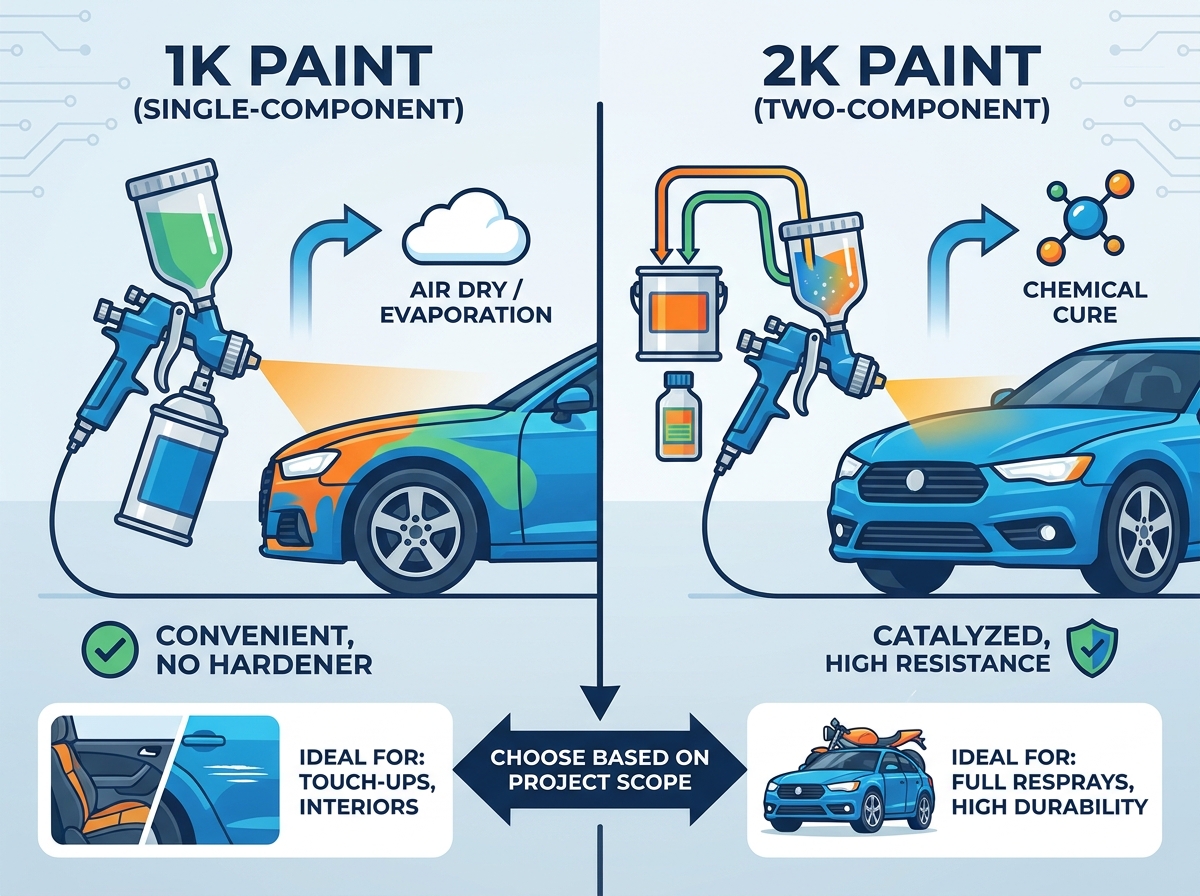
Automotive paint selection often forces a harsh compromise between application convenience and long-term durability. You want a flawless finish, but you may not want to mix toxic chemicals or set up a professional spray booth. For specific repairs, restorations, or budget-conscious projects, 1K Car Paint offers a highly accessible solution. This holds true provided you understand its chemical limitations compared to heavier two-component systems. If you apply it in the wrong context, you risk peeling, wrinkling, and costly rework. This guide provides an evidence-based framework to help you evaluate, shortlist, and select the right products. We will break down project scopes, environmental conditions, and desired finish qualities. By the end, you will navigate formulations confidently without falling for exaggerated marketing claims.
Key Takeaways
- 1K car paint cures through solvent evaporation rather than a chemical catalyst, making it highly convenient but inherently less resistant to harsh chemicals and UV exposure than 2K alternatives.
- The primary success criteria for choosing 1K depend on the project scope: it excels in touch-ups, interior components, and localized panel repairs.
- Selecting the right formulation (acrylic, enamel, or urethane) dictates the balance between flash-off time, flexibility, and final hardness.
- Successful implementation requires strict adherence to compatibility rules, as 1K paints can react poorly (wrinkling or lifting) when applied over or under certain aggressive solvents.
Framing the Decision: When Does 1K Car Paint Make Sense?
Defining the Baseline
To make an informed decision, you must first understand the baseline chemistry. A single-component system requires no hardener or activator. It is a pre-mixed, air-drying solution. When you spray it, the solvents within the mixture begin to evaporate. Once these solvents outgas completely, the remaining resins and pigments form a solid film. Because it relies purely on evaporation, you skip the precise measuring and mixing steps required for catalyzed products.
Project Success Criteria
You define a successful application by aligning your expectations with the product’s capabilities. Color match accuracy stands out as a critical metric. A quality product should seamlessly blend into your existing finish. You also need to establish an acceptable lifespan. If you repair a minor scratch, success means the repair goes unnoticed for several years. Furthermore, ease of application remains a primary goal. The material should flow evenly and flash off predictably under normal garage conditions.
1K vs. 2K Reality Check
The industry constantly debates the merits of single-component versus two-component systems. Knowing exactly where each thrives will save you time and frustration.
Where 1K wins: You gain incredible setup speed. You face no pot-life limitations, meaning the material will not harden inside your spray gun if you take a break. Toxicity levels drop significantly because these formulas omit dangerous isocyanates found in most catalyzed clear coats. This makes them ideal for small jobs where heavy protective infrastructure is unavailable.
Where 1K falls short: You cannot expect miracle durability. High-traffic exterior panels, like front bumpers prone to rock chips, challenge single-component structural limits. Areas exposed to spilled fuel, such as motorcycle gas tanks, will rapidly degrade. Show-car high-gloss finishes requiring aggressive wet sanding and heavy buffing generally demand a catalyzed structure.
Ideal Use Cases
Certain scenarios make single-component systems the logical choice for both DIY enthusiasts and professional touch-up businesses. Engine bays rarely see UV exposure, making them perfect candidates. Interior trims benefit greatly from the ease of application and fast drying times. You will also find immense value when tackling minor scratch repairs, repainting mirror caps, or refreshing wheel finishes. In these low-impact zones, the paint performs exceptionally well.
![1K Car Paint Application]()
Core Solution Categories: Types of 1K Automotive Paint
1K Acrylic Lacquers
Acrylic lacquers represent one of the oldest formulations in the automotive world. They offer a blisteringly fast drying time. You can often touch the surface within minutes of spraying. They also sand and buff with incredible ease, allowing you to quickly polish out minor imperfections. However, this convenience comes with steep trade-offs. Acrylics remain quite brittle, making them highly prone to chipping. They possess very low chemical resistance and demand regular polishing to maintain their high-gloss appearance.
1K Enamels
Enamels provide a distinct step up in surface hardness. Unlike lacquers, they dry to a natural gloss without needing a separate clear coat. This single-stage approach saves you an entire application step. However, enamels bring their own challenges. They exhibit much slower curing times. This prolonged tackiness increases the risk of dust and debris contamination settling into the wet finish. If you make a mistake, such as a run or sag, enamels are notoriously difficult to correct or blend once dry.
1K Polyurethanes / Urethanes
Modern chemistry has introduced single-component polyurethanes. These advanced formulations offer a vastly improved balance of flexibility and UV resistance. They adapt better to temperature changes, reducing the likelihood of surface cracking over time. While they represent a massive upgrade over acrylics, you must manage your expectations. They cost more than basic enamels and lacquers. Even as premium single-component options, they still lack the dense, cross-linked structural integrity of a fully catalyzed urethane system.
Aerosol vs. Bulk Delivery
Delivery systems dictate your workflow. Professional-grade aerosols offer localized convenience. They utilize specialized precision fan nozzles to mimic a real spray gun pattern. Aerosols eliminate cleanup time and compressor requirements. Conversely, bulk liquids (quarts or gallons) require a High Volume Low Pressure (HVLP) setup. Bulk usage provides vastly superior atomization, precise fluid control, and a much better cost-per-ounce value for larger panel coverage.
Table: Formulation Comparison Overview | Paint Type | Drying Speed | Durability | Primary Advantage | Notable Weakness |
| Acrylic Lacquer | Very Fast | Low | Easy to sand and polish | Brittle, chips easily |
| Enamel | Slow | Moderate | Natural single-stage gloss | Prone to dust contamination |
| Polyurethane | Moderate | High (for 1K) | Better UV and flex resistance | Higher cost, lacks cross-linking |
Key Evaluation Criteria for Selecting Your 1K Car Paint
Durability to Outcome Ratio
You must honestly assess the required lifespan of your repair. Evaluate the vehicle's usage profile. A daily driver subjected to highway debris, automatic car washes, and harsh weather demands a tougher formulation, like a premium urethane. Conversely, a garage-kept weekend vehicle used primarily for local car shows can easily sustain an acrylic touch-up. Aligning your expectations with the vehicle's environment prevents premature failure.
Color Matching Capabilities
An exact color match separates a professional-looking repair from a glaring eyesore. Vendors handle color formulation differently. Consider these critical factors:
- OEM Code Matching: Ensure the vendor mixes based on exact factory paint codes rather than generic color spectrums.
- Binder Quality: High-quality binders keep metallic flakes suspended evenly, preventing a mottled appearance.
- Specialized Finishes: Verify if the supplier can replicate complex three-stage pearls or heavy metallics accurately without requiring a catalyst.
Chemical and Environmental Tolerance
Check the documented technical data for the product you intend to buy. A standard single-component finish struggles against harsh chemicals. However, premium options formulate specifically to resist UV degradation and road salt. If you live in a coastal area or face harsh winters, prioritize UV inhibitors and corrosion resistance. Remember, mild solvents like bug and tar removers can sometimes dull inferior formulations.
Curing Environment Constraints
Environmental control dictates your success. Single-component materials rely entirely on ideal evaporation conditions. High ambient temperatures combined with low humidity create the perfect scenario. If you spray in a cold, damp garage, you risk severe solvent entrapment. The surface may feel dry, but underlying solvents remain trapped. This leads to soft paint that easily scratches or loses its gloss weeks later.
Implementation Realities and Adoption Risks
The Compatibility Risk (Lifting & Wrinkling)
Compatibility remains the most common pitfall. The industry refers to this as the lifting or wrinkling effect. When you spray fresh solvents over an unknown substrate, the new chemicals aggressively attack the old layers. If the underlying layer lacks stability, it will swell and wrinkle like alligator skin. You run a high risk of solvent reaction when spraying over old enamel, applying incompatible clear coats, or skipping a dedicated sealer over bare plastics.
Application Pitfalls
Mastering the application requires patience. Spraying coats too heavily invites disaster. When you lay down too much material, the top layer skins over rapidly. This traps evaporating solvents underneath. Eventually, these trapped gasses burst through the skin, leaving tiny pinholes known as solvent pop.
Shrinkage presents another major reality. Because these materials outgas over several weeks, the film thickness reduces. This shrinkage can slowly reveal underlying sanding scratches that were completely invisible on the day you painted. Proper surface preparation using fine-grit sandpaper mitigates this risk.
Safety and Compliance
Do not confuse the absence of isocyanates with safety. Even without a toxic hardener, 1K Car Paint contains high levels of Volatile Organic Compounds (VOCs). These fumes are hazardous to your health and the environment. You must prioritize safety. Emphasize the necessity of proper cross-ventilation in your workspace. Always wear a NIOSH-approved organic vapor respirator to protect your lungs and maintain compliance with local environmental handling guidelines.
Shortlisting Logic: A Buyer’s Framework for 1K Paint
Step 1: Audit the Substrate
Start by determining exactly what currently exists on the vehicle. You need to verify whether the panel features bare metal, plastic, old factory paint, or a previous aftermarket repair. You might need to perform a simple solvent test. Rub a hidden area with lacquer thinner. If the paint transfers easily to your rag, you have an unstable base. You must ensure primer and basecoat compatibility before applying any new material.
Step 2: Define the Finish Architecture
Next, map out your layer structure. Decide between a single-stage system and a basecoat/clearcoat system. A single-stage product mixes color and gloss into one layer. It saves time but lacks depth. A basecoat paired with a clear coat provides a richer, factory-like appearance. You can even pair a single-component color base with an upgraded catalyzed clear coat for enhanced durability, provided you follow flash times strictly.
Step 3: Vendor Evaluation
Do not buy blindly based on price. Shortlist brands based on transparent Technical Data Sheets (TDS). The TDS outlines exact flash times, recommended sanding grits, and ideal spraying temperatures. Look for verifiable user reviews. If you choose aerosols, pay close attention to feedback regarding nozzle quality. Cheap nozzles sputter and ruin the finish. Evaluate color fidelity reviews to ensure the vendor consistently hits OEM targets.
Next Steps
Once you select your framework, move into procurement. Purchase the paint alongside compatible prep solvents. A high-quality wax and grease remover is mandatory. Never skip the testing phase. Before you touch your vehicle, apply the entire system onto a hidden test panel or a piece of scrap metal. This confirms color match, tests your spray technique, and verifies chemical compatibility.
Conclusion
Using single-component formulations is a highly effective strategy when you deploy them within their structural limits. They serve as an efficient, highly accessible tool for specific automotive repairs. They are not a miracle substitute for catalyzed urethanes, but they solve real-world cosmetic issues without demanding professional infrastructure.
You must align your selected chemistry with your exact project scope. Do not prioritize pure cost savings over compatibility and surface preparation. A cheap can of paint sprayed over an improperly prepped panel will always result in a costly rework.
Take action today by locating your vehicle's exact OEM color code, usually found in the driver's door jamb or under the hood. Consult a technical data sheet from a reputable supplier, gather your prep materials, and begin your next restoration project with confidence.
FAQ
Q: Can I spray a 2K clear coat over a 1K basecoat?
A: Yes, this is a common hybrid approach to gain the ease of a 1K color match with the chemical resistance of a 2K clear. However, strict adherence to the 1K basecoat's flash-off time is mandatory to prevent the 2K solvents from wrinkling the base.
Q: How long does 1K car paint take to fully cure?
A: While it may be "dry to the touch" within 30 to 60 minutes, full outgassing and curing of 1K paint can take anywhere from 30 to 90 days depending on film thickness and ambient temperature.
Q: Is 1K paint fuel resistant?
A: Generally, no. Most 1K paints will soften, stain, or dissolve if exposed to gasoline or harsh automotive fluids. For areas prone to fuel spills, a 2K product is strongly recommended.
Q: Do I need an air compressor to apply 1K automotive paint?
A: Not necessarily. Many high-quality 1K automotive paints are available in professional-grade aerosol cans with fan-spray nozzles, making them ideal for localized DIY repairs without pneumatic equipment.
Q: Why did my 1K paint crack or peel after a few months?
A: Failure is rarely due to the paint itself; it is typically caused by improper surface preparation, incompatible primers, applying coats too thickly, or spraying in high-humidity conditions that trap moisture.