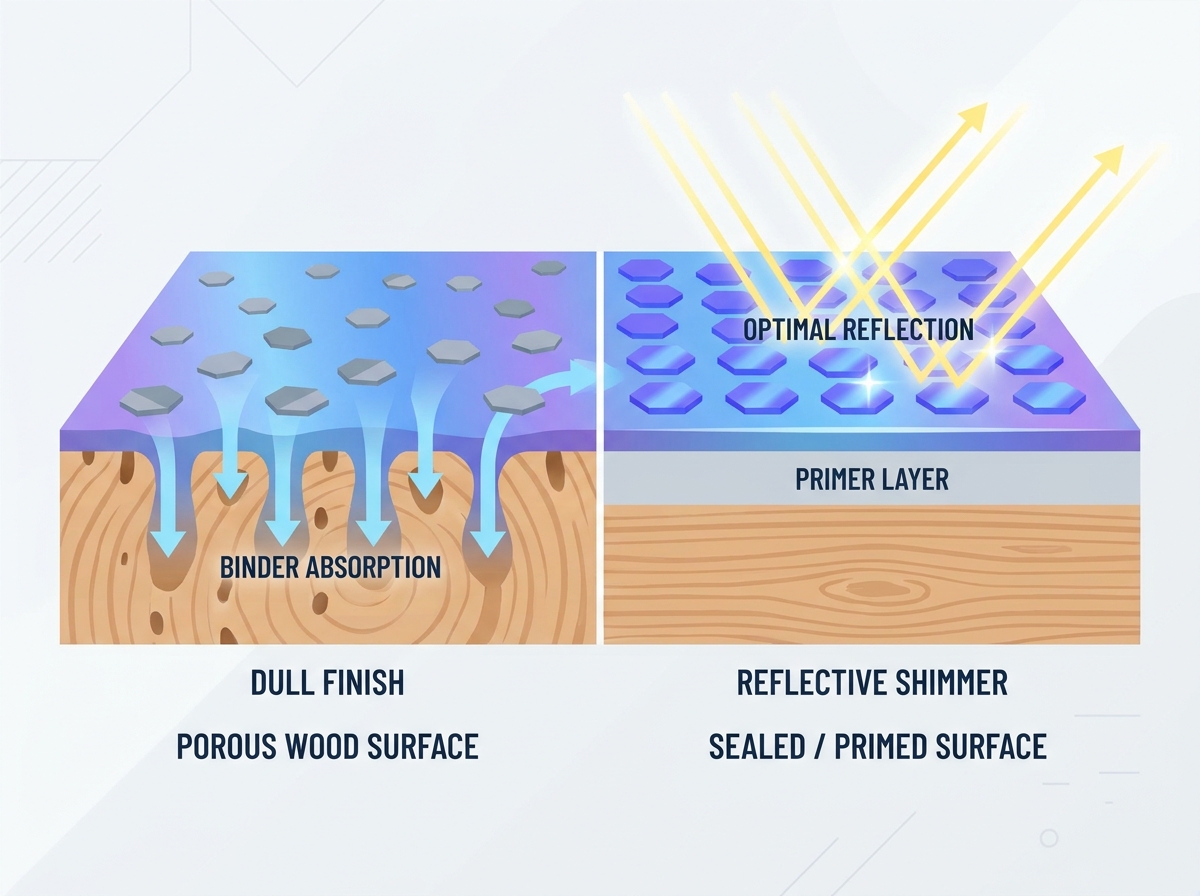
Standard acrylics rely on flat pigments to deliver uniform color. Acrylic pearl paint fundamentally differs. It uses coated mica flakes or synthetic pearlescent pigments. These specialized pigments require careful handling.
When you apply them to porous surfaces like wood, problems often arise. Raw wood absorbs the essential polymer binder quickly. This rapid absorption leaves the delicate mica flakes dull, dry, and unevenly distributed. Your project loses its intended radiant shimmer. Proper application demands a strategic approach to surface preparation.
This guide cuts through marketing jargon to focus on real material performance. We establish a clear framework for evaluating pearlescent acrylics based on pigment density, binder quality, and surface compatibility. You will learn precise application realities for wood and mixed-media crafts. We also cover essential surface preparation techniques. Following these methods ensures your final piece achieves a durable, highly reflective finish.
Key Takeaways
- Base coats matter: Pearl acrylics require a sealed or primed surface (like a flat black or white base) to maximize light refraction and prevent binder absorption into wood grain.
- Binder-to-pigment ratio dictates quality: Artist-grade pearl paints use high-density mica with strong polymer binders; craft-grade alternatives often use fillers that dilute the shimmer.
- Topcoats alter finishes: Applying a matte or satin varnish over pearl paint will scatter light and destroy the pearlescent effect; only gloss or high-gloss sealants should be used.
- Viscosity drives application: Heavy-body pearl paints are required for textured brushwork on wood, while fluid or high-flow variations are necessary for acrylic pouring.
1. Core Evaluation Criteria for Pearlescent Acrylics
To choose the right product, you must understand its chemical formulation. You need to look beyond the basic color label. Examine the underlying components. The primary ingredients directly dictate your final finish.
Pigment Source (Natural Mica vs. Synthetic)
Manufacturers source reflective core materials in two distinct ways. Natural mica flakes create a softer, traditional shimmer. They reflect light unevenly because of their jagged, natural shapes. This irregular reflection creates a highly subtle glowing effect on crafts.
Synthetic mica operates differently. Scientists refer to it as fluorphlogopite. Manufacturers engineer it in a lab for maximum optical clarity. It offers significantly higher reflectivity across all lighting conditions. The resulting colors appear visibly crisper. Synthetic mica also boasts superior UV resistance. You should prioritize synthetic pigments for any outdoor wooden pieces. They resist fading heavily over time.
Opacity and Base Transparency
Crafters often misjudge how pearl colors cover a wooden surface. Most pearlescent formulas remain naturally semi-opaque. Many are highly transparent. You must check the brand's exact opacity rating before buying. Manufacturers usually print this rating directly on the container.
Transparent pearls function beautifully as delicate glazes. You layer them over solid base colors to tint the piece. Opaque pearls contain thicker pigment loads. They provide standalone coverage on bare materials. Understanding this crucial distinction prevents frustratingly patchy applications on your crafts. You can run a simple test first. Paint a black line on a scrap piece. Brush the pearl color over it. If you see the black line clearly, the paint acts as a transparent glaze.
Polymer Binder Strength
The liquid emulsion holds the mica flakes together. We call this the polymer binder. You must evaluate this acrylic emulsion carefully. Weak binders cause significant physical problems down the line. They often lead to "mica rub-off" after drying. The shimmering flakes literally dust off your hands when touched.
Look for high-quality artist formulas. Manufacturers design these specific paints for aggressive multi-surface adhesion. Strong binders lock the flakes down permanently into the matrix. They protect your Acrylic pearl paint investment. You avoid premature peeling. You avoid unexpected flaking during regular handling.
2. How Wood and Craft Surfaces Impact Paint Performance
Wood behaves like a rigid, thirsty sponge. It features a complex, highly porous cellular structure. This biological reality directly impacts your painting process. You cannot treat raw wood like primed canvas or plastic.
Porosity and the "Dulling" Effect
Raw timber actively pulls moisture inward. It absorbs the wet acrylic binder extremely fast. The heavy mica flakes remain stranded on top of the grain.
This physical separation causes severe structural failure. The rapid liquid loss disrupts the proper alignment of the tiny flakes. They pile up haphazardly instead of lying flat. This microscopic chaos kills the pearlescent sheen completely. You get a chalky, flat surface instead. The light cannot bounce back to your eyes evenly.
The Necessity of Priming
You must block this porous absorption early. Applying Gesso provides an excellent, industry-standard solution. Standard acrylic underpaintings also work perfectly well. Priming seals the wood fibers effectively. It creates a slick barrier.
The color of your primer matters immensely. A dark base coat dramatically intensifies interference colors. Black backgrounds force the mica to reflect maximum visible light. White base coats create softer, more pastel-leaning effects. Your primer choice dictates the final intensity. We recommend testing both on a scrap piece.
Laser-Cut Wood Considerations
Many crafters use laser-cutting tools today. Glowforge projects remain incredibly popular online. These machines burn the wood to cut it. Burnt edges retain soot and sticky residual resin.
This soot bleeds easily into light-colored wet paint. It ruins the clean shimmer instantly. You must follow strict prep steps. Sand all burnt edges first using fine-grit paper. Wipe the dust away cleanly. Sealing them beforehand is a mandatory implementation step. A thin layer of clear shellac or heavy primer works perfectly here. This stops the soot from migrating into your final coat.
![Applying pearlescent paint on wooden crafts]()
3. Viscosity and Application Methods: Pouring vs. Brushing
Paint thickness drastically changes how you work. Manufacturers refer to this thickness as viscosity. You match the viscosity to your specific craft method. Using the wrong thickness guarantees frustrating visual results.
Heavy Body Pearl Paints for Detailed Wood Crafts
Heavy body paints feel similar to soft butter. They hold their physical shape perfectly on the brush. You use them primarily for detailed woodwork. They excel at retaining distinct, structural brushstrokes.
They create beautiful textured highlights on furniture. Carved wood details pop beautifully underneath them. They require minimal thinning before use. You can apply them straight from the tube or jar. You will want a stiff synthetic bristle brush for these. The stiff bristles push the heavy formula into the wood grain effectively.
Fluid Pearl Paints for Acrylic Pouring
Fluid art demands very runny consistencies. Heavy body formulas fail completely here. You must dilute them aggressively for pouring. This heavy dilution breaks down the fragile polymer binder.
Instead, you should buy dedicated fluid pearl formulas. They maintain their brilliant shimmer perfectly. You mix them easily into pouring mediums like Floetrol or Liquitex. They flow smoothly across flat wooden panels. Their pigment density remains high despite the thin texture.
Medium Compatibility Risks
You cannot mix these paints carelessly. Blending them into opaque mediums causes immediate trouble. Mixing them into titanium white-based colors is equally disastrous. We see this mistake often in beginner workshops.
The heavy white pigment instantly buries the delicate mica. It covers the flakes completely. This neutralization destroys the specialized pearl effect. You waste expensive materials quickly this way. Always mix them into transparent or semi-transparent mediums. Gel mediums work exceptionally well for extending volume without killing the shine.
4. Common Risks: Why Pearl Paints Fail on Wood (And How to Prevent It)
Even perfect surface preparation cannot stop certain errors. Application mistakes ruin many projects. We see the same failures repeatedly in crafting circles. You can avoid them by recognizing the core operational risks.
Loss of Shimmer from Incorrect Varnishing
Crafters often seal their work poorly at the very end.
- The Risk: Using standard craft sealants like matte or satin sprays.
- The Solution: You must evaluate your topcoat options carefully. Matte finishes contain microscopic matting agents. These agents scatter light in random directions. They kill the optical refraction of the mica completely. You should select purely gloss-based, non-yellowing acrylic varnishes. Gloss sealants maintain the crucial light refraction. They enhance the depth of the pearl effect.
Streaky Application
Mica requires specific physical alignment to shine properly.
- The Risk: Over-brushing the wet surface. Mica flakes need to lay flat against the wood. Overworking the paint pushes these flakes into chaotic angles. This physical disruption results in a dull, streaky finish.
- The Solution: You need a soft synthetic brush. Apply the liquid in single, unidirectional strokes. Do not drag the brush back and forth repeatedly. Let each layer dry entirely undisturbed. Apply a second coat only after the first cures completely.
Adhesion Failure on Smooth Crafts
Mixed-media pieces present unique chemical challenges.
- The Risk: Peeling on non-porous craft surfaces. You might paint over resin accents attached to wood. The smooth resin repels the binder. The dry layer peels off in large strips later.
- The Solution: You perform a light scuff-sanding first. Use 400-grit sandpaper over the smooth areas. Follow up immediately using a specialized adhesion-promoting primer. This mechanical bond secures the delicate color layer firmly.
5. Decision Framework: Shortlisting the Right Paint for Your Project
Choosing the right product requires matching it to the task. Not all paints suit every project type. Different applications demand varying material strengths. Below is a framework to guide your purchasing decisions effectively.
Pearlescent Paint Selection Framework
| Project Type | Recommended Viscosity | Pigment Priority | Key Evaluation Metric |
| High-End Wood Furniture | Heavy Body | Synthetic Mica | Lightfastness & Binder Durability |
| Fluid Art Panels | High-Flow / Fluid | Natural or Synthetic | Pouring Medium Compatibility |
| Kids' Crafts / Hobby | Medium (Craft Grade) | Natural Mica | Fast Drying & Low Cost |
For High-End Wood Furniture/Retail Crafts
Professional pieces demand top-tier materials. You cannot compromise on quality here. Customers expect lasting durability from premium goods. They want pieces that survive daily life.
Prioritize artist-grade, heavy-body acrylic pearls. These thicker formulas stand up to rigorous daily wear. Focus your evaluation heavily on lightfastness ratings. You want synthetic mica for maximum UV protection. Binder durability ensures the finish survives regular dusting and handling. Look for paints branded specifically for professional use. They contain minimal filler materials.
For Fluid Art and Acrylic Pouring on Wood Panels
Pouring artists need fluid movement. Thick paints hinder this specific process entirely. You rely on gravity to move the colors.
Prioritize fluid or high-flow variations. You evaluate them based on compatibility. Test how well they integrate into your favorite pouring mediums. Check their pigment density carefully. You need strong color payoff without any added thickness. High-flow formulas deliver this precise balance. They do not dilute heavily when mixed with pouring additives.
For Hobbyists and Kids' Crafts
Casual projects prioritize speed and safety. You rarely need expensive archival properties here. Cost efficiency becomes the primary concern for bulk crafts.
Prioritize multi-surface craft-grade pearls. They often feature built-in sealants. Focus your evaluation on low cost and fast drying times. These simpler formulas handle casual handling well enough. They clean up easily from brushes and hands. You can buy them in large economy bottles. They provide adequate shimmer for simple weekend projects.
Conclusion
- Choosing the best Acrylic pearl paint for wood isn't just about picking a color; it’s about matching the paint’s viscosity, pigment type, and binder strength to your specific craft application.
- Always prime raw wood to block the porous grain from absorbing the crucial polymer binder.
- Avoid over-brushing wet layers to keep the delicate mica flakes lying perfectly flat.
- Seal your final pieces exclusively using high-gloss varnishes to preserve the optical light refraction.
Next Step: Assess your current project. If working with raw wood, invest in a high-quality primer alongside your chosen pearl paint. If doing acrylic pours, test your pouring medium ratios on a scrap piece of wood to ensure the mica isn't diluted before committing to the final piece.
FAQ
Q: Do I need a primer before applying acrylic pearl paint on wood?
A: Yes. Raw wood absorbs the acrylic binder, leaving the pearlescent flakes dry and dull. A primer or a flat acrylic base coat is highly recommended.
Q: Why did my pearl paint turn dull after it dried?
A: This is usually caused by either applying the paint over an unsealed porous surface, overworking the paint with a brush (which misaligns the mica flakes), or applying a matte topcoat.
Q: Can I mix pearl acrylic paint with regular acrylics?
A: Yes, but mix it only with transparent or semi-transparent colors. Mixing pearl paint with highly opaque colors (like Titanium White) will cover the mica flakes and eliminate the shimmer.
Q: What is the best way to seal pearl paint on wood crafts?
A: Always use a high-gloss acrylic varnish or resin topcoat. Matte or satin finishes contain matting agents that scatter light, destroying the pearlescent effect.