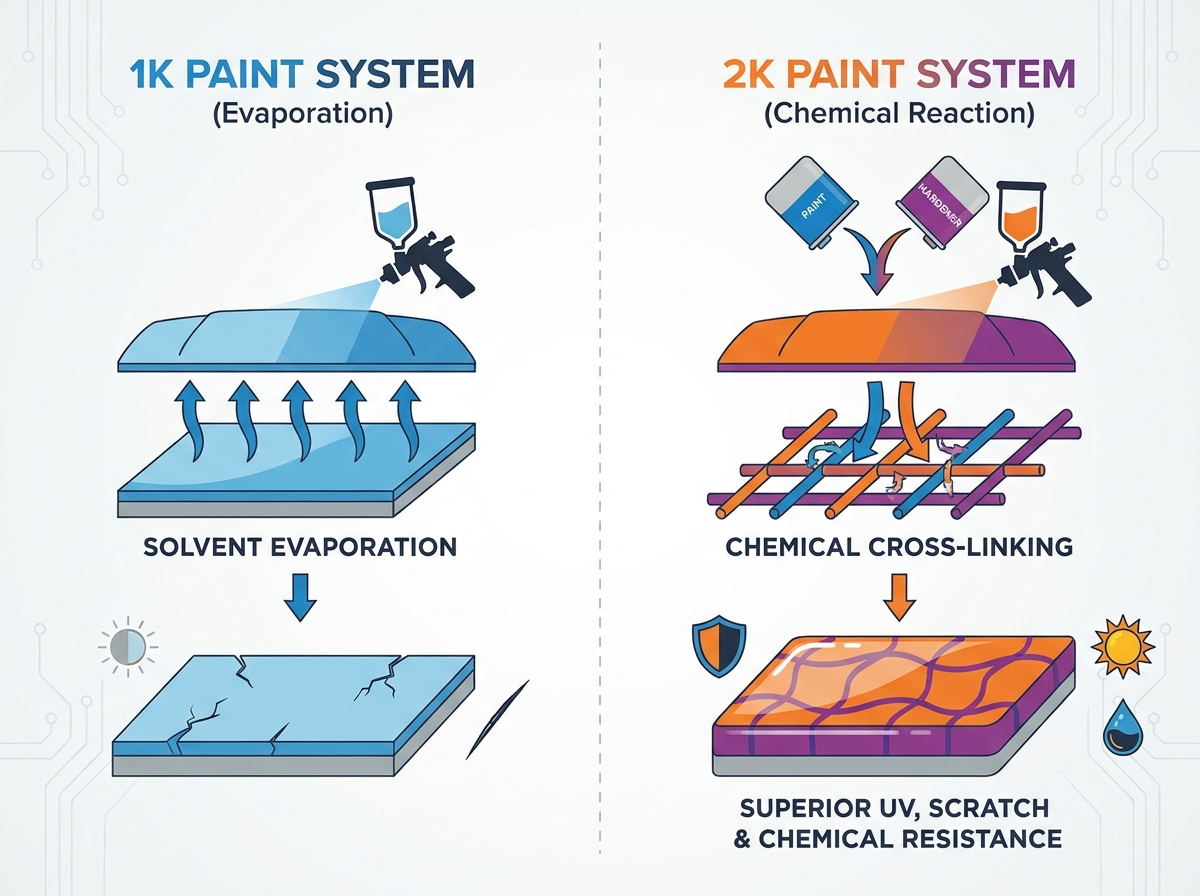
Achieving a factory-grade, chemical-resistant finish is rarely simple. You must transition from standard 1K products to true two-component systems. However, the stakes for application and safety become much higher. This guide moves past flashy marketing claims. We evaluate 2K car paint based on durability, application methods, and project scale. You need real metrics to make informed buying decisions. We introduce a clear evaluation framework below. It helps you select the exact product perfectly matching your needs. You will match materials to your available equipment, current budget limits, and local compliance requirements. Choosing correctly prevents catastrophic peeling later. It ensures your automotive restoration endures harsh outdoor elements seamlessly. Following our expert advice removes guesswork entirely. You can achieve professional-level gloss retention in your own garage.
Key Takeaways
- 2K car paint relies on a chemical catalyst (hardener) rather than air drying, resulting in superior UV, scratch, and chemical resistance compared to 1K alternatives.
- The primary decision for buyers is choosing between activated 2K aerosol cans (for spot repairs and DIY) and traditional bulk/canned 2K systems (for full panels and professional use).
- Evaluating pot life (the working window after mixing) and curing times is critical to preventing material waste and application errors.
- Strict safety protocols—specifically regarding isocyanates and proper respirator use—are mandatory, non-negotiable factors when implementing any 2K paint system.
The Business Case for 2K Car Paint vs. 1K Alternatives
Chemical Hardening vs. Evaporation. Single-component products dry through simple solvent evaporation. They leave behind a vulnerable, reversible film. Harsh chemicals can easily re-liquefy these temporary coatings. In contrast, two-component systems undergo a complex cross-linking chemical reaction. You mix a specific hardener into the base resin. This process builds a rigid, interlocking molecular structure. Frame this upgrade as a massive structural improvement for any vehicle surface. It transforms a temporary cosmetic fix into a permanent, impenetrable barrier. The chemical cure fundamentally changes the material properties permanently.
Durability and ROI. Consider the long-term cost benefits of using a robust topcoat. The cured surface powerfully resists gasoline spills, harsh UV rays, and daily physical abrasion. It repels bird droppings, tree sap, and road salt effortlessly. Standard 1K touch-ups often suffer premature failure under these exact conditions. They chip away or dissolve under harsh commercial cleaners. Upgrading ensures you avoid repeating the same tedious repairs year after year. The initial investment yields superior longevity. You save immense labor hours over the lifespan of the vehicle.
Success Criteria. Defining a successful application requires looking at measurable, objective results. You should expect exceptionally high gloss retention over many years. The clear coat must exhibit zero yellowing under intense summer sunlight. Furthermore, it should never peel or delaminate from the underlying basecoat. The surface must feel slick and hard to the touch. Meeting these specific criteria guarantees a professional-grade restoration. It rivals original factory finishing standards perfectly.
![Applying automotive paint in a professional spray booth environment]()
2K Aerosol Cans vs. Traditional Spray Gun Systems
Framing the Choice. Match the product format directly to your project scale. You also must consider available infrastructure. Evaluate your access to high-capacity air compressors or dedicated spray booths. Smaller scopes demand entirely different solutions than full-body custom restorations. Choosing the wrong format wastes significant time and expensive materials.
2K Aerosol Systems (The Convenience Option)
Mechanism. These innovative cans feature a clever internal bladder system. You press a special red button onto the bottom pin. This action punctures a hidden hardener chamber inside the cylinder. You then shake the can vigorously for two minutes. This mixes the two separate chemical components thoroughly.
Pros.
- This method offers zero cleanup after the job finishes.
- You never need an expensive air compressor or pneumatic hoses.
- The engineered nozzle provides precise atomization tailored for smaller, detailed jobs.
- It saves immense preparation and breakdown time for casual hobbyists.
Constraints. You will pay a much higher cost per ounce. The product has a strictly limited pot life. It usually lasts only 24 to 48 hours once activated. Furthermore, the coverage area remains quite small. It works ideally for mirrors, replacement bumpers, or single isolated panels. You cannot paint an entire hood evenly using aerosols.
Bulk / Canned 2K Paint (The Professional Standard)
Mechanism. You perform manual mixing of the colored paint, hardener, and chemical reducer. This requires following precise manufacturer ratios carefully in calibrated mixing cups. Common examples include 4:1:1 or 2:1 liquid mixtures. High accuracy ensures proper chemical bonding during the final cure phase.
Pros.
- Bulk materials are highly cost-effective at larger production scales.
- You can customize the fluid viscosity easily using varying temperature reducers.
- The unmixed components boast an essentially unlimited shelf life.
- This makes long-term inventory management simple for busy body shops.
Constraints. This route requires heavy initial equipment investments. You need professional HVLP guns, high-capacity rotary compressors, and inline moisture traps. It also demands rigorous gun cleaning protocols using strong solvents. Neglecting routine maintenance ruins expensive spray tools rapidly.
Key Evaluation Criteria for Selecting a 2K Paint
Finish Type and Purpose. You must differentiate between various product functions before buying. Primer surfacers offer high build capabilities and excellent corrosion resistance over bare metal. Single-stage colors combine vivid pigments and glossy clear resin into one single layer. True clear coats provide a transparent, protective topcoat over your delicate base color. Each serves a very distinct role in the finishing process.
UV Resistance & Non-Yellowing Properties. Intense sunlight breaks down inferior materials quickly. We identify aliphatic polyurethane formulas as the absolute gold standard here. They prevent severe UV degradation over extremely long periods. Your finish remains crystal clear for years. Conversely, cheaper aromatic formulas turn noticeably yellow under harsh sun exposure.
Pot Life & Cure Times. Always evaluate your available working times carefully. Faster hardeners work beautifully in cooler winter temperatures. However, they drastically reduce your available pot life in the mixing cup. This constraint requires much tighter project management during application. You must spray the mixed batch before it hardens inside your gun.
Compatibility. Mixing different chemical families creates major application headaches. We emphasize the serious risk of solvent pop. Ugly surface wrinkling also occurs quite frequently. These defects happen if your aggressive topcoat proves incompatible against the underlying basecoat or primer. You must read technical sheets to verify cross-brand compatibility.
Common Automotive Paint Formats Overview
| Format Category | Primary Activation Mechanism | Ideal Project Scope | Required Equipment |
| Single-Component (1K) | Solvent Evaporation | Minor Cosmetic Touch-Ups | Standard Aerosol Nozzle |
| Activated Aerosol (2K) | Internal Hardener Bladder | Spot Repairs / Single Panels | Integrated Spray Valve |
| Bulk Fluid Systems (2K) | Manual Cup Mixing | Full Body Restorations | HVLP Gun / Air Compressor |
Implementation Risks, Safety, and Compliance
The Isocyanate Reality. We must address severe respiratory health hazards directly. You will find dangerous isocyanates in almost all modern hardeners. Standard paper dust masks are completely insufficient here. You must use organic vapor respirators or supplied-air breathing systems. Full skin and eye protection remain absolutely required. Neglecting these strict rules invites permanent lung damage. Isocyanates enter the bloodstream through the lungs and exposed skin pores easily.
Environmental Controls. Ambient weather conditions dictate your specific choice of additives. Temperature and relative humidity tell you whether to use Fast, Medium, or Slow reducers. High humidity frequently causes "blushing" during application. This leaves an ugly, permanent milky cloudiness trapped inside applied clear coats. You must monitor your spray environment closely using digital hygrometers.
VOC Regulations. Local and state environmental laws heavily restrict chemical usage. California's strict CARB regulations serve as a prime regulatory example. These rules dictate whether you must purchase special low-VOC formulas. You might also need specific waterborne-compatible clear systems. Always check regional compliance codes before buying restricted bulk materials online.
Shortlisting Logic: How to Choose Your Brand and Product
Assessing Manufacturer Reputation. Finding reliable brands requires some investigative digging. Look for companies providing transparent Technical Data Sheets (TDS). They must also supply clear Material Safety Data Sheets (MSDS). A total lack of official documentation is a massive warning sign. Reliable manufacturers always test and document their chemical formulas extensively.
Avoiding False Economy. Cheap clears may look incredibly fantastic initially. However, they routinely fail basic UV exposure testing within months. We explain this scenario as a classic false economy trap. The intensive labor required to strip failed paint costs far more later. Always balance upfront material costs alongside verifiable durability metrics. Your initial investment pays off through long-term finish stability. Look for High Solids (HS) formulas over cheaper alternatives.
Next-Step Actions.
- Define the exact square footage of the planned project accurately.
- Audit your current safety gear and available application equipment completely.
- Download the TDS for all shortlisted products immediately.
- Verify specific mixing ratios and temperature compatibility before purchasing anything.
Conclusion
Choosing the absolute best 2K car paint requires careful, methodical calculation. You must balance your assessment of the ambient application environment. Prioritizing correct safety gear remains your top operational duty. Calculating the true material volume needed prevents costly mid-project paint shortages. Following these methodical steps guarantees a significantly smoother workflow overall.
Our final recommendation is highly straightforward. Default to high-quality aerosols for localized spot repairs if you lack specialized equipment. Conversely, invest heavily in traditional mixing systems for full-panel jobs. Complete vehicle restorations demand the exact control bulk materials provide. Proper planning ensures stunning, long-lasting automotive finishes every single time.
FAQ
Q: Can you apply 2K clear coat over a 1K basecoat?
A: Yes, but the 1K basecoat must be fully flashed off. It must cure according to exact manufacturer specifications. This prevents the active solvents present in the clear from biting into the base. Rushing this crucial step causes severe wrinkling and total finish failure.
Q: How long does activated 2K aerosol paint last in the can?
A: It typically lasts 24 to 48 hours. This timeframe depends heavily on your ambient room temperature. Warmer rooms accelerate the internal hardening process significantly. It cannot be saved for future projects once the hardener releases internally.
Q: Do I need a spray booth to use 2K car paint?
A: A professional booth is highly optimal. It provides superior dust control and excellent ventilation. However, DIY applications can happen in controlled, well-ventilated garages. You must follow strict respiratory and skin protection protocols at all times. Air movement prevents dangerous fume accumulation.
Q: What is the standard mixing ratio for traditional 2K paint?
A: Ratios vary strictly by brand and specific product type. Common examples include 4:1, 2:1, or 4:1:1 when adding a reducer. Always consult your specific product's Technical Data Sheet before mixing. Guessing ruins the chemical cure and wastes expensive materials.