Finding the exact shade for a space is often the most paralyzing step of a renovation or design project. Staring at endless swatches can quickly overwhelm even the most seasoned interior designers. People naturally crave absolute perfection for their living spaces. Buyers face a crossroads when starting a new project. They must choose a heavily vetted, off-the-shelf brand color, or pursue a highly specific Custom color paint match based on a fabric, discontinued chip, or specific aesthetic vision. This pivotal choice ultimately dictates how your room will function over time. A successful paint choice isn't just about day-one aesthetics. It must account for future touch-up viability, lighting variance, cost-efficiency, and batch-to-batch consistency. Our comprehensive guide will help you navigate this vital decision with absolute clarity.
Key Takeaways
- Standard paints offer uncompromised batch consistency, making future touch-ups and repaints highly predictable and convenient.
- Custom color paint is ideal for exact matching (e.g., historical restorations, specific decor, or discontinued colors) but requires strict record-keeping of the mixing formula.
- Spectrophotometer color matching is highly accurate but not infallible; sheen, lighting (metamerism), and base paint quality can alter the final perception.
- Decision-making should hinge on the specific room's traffic level, project timeline, and your tolerance for slight color variances during future maintenance.
Understanding the Baseline: Custom Color Paint vs. Standard Formulations
Every successful room transformation begins by understanding your primary material options. You must recognize the distinct differences between standard palettes and customized formulations. This foundational knowledge prevents costly mistakes later.
Standard Paint (Brand Palettes)
Major paint manufacturers invest millions in their standard color collections. Dedicated design teams formulate these specific colors over many months. They produce them using standardized, rigorously tested tinting formulas. These formulas leave absolutely no room for interpretation.
Manufacturers pre-calibrate every standard color for specific bases and sheens. This careful calibration ensures highly predictable light reflectance values (LRV). When you select a standard color, you buy a scientifically proven product. You know exactly how it will perform under typical conditions. The brand guarantees the color recipe remains identical across different regions.
Custom Color Paint
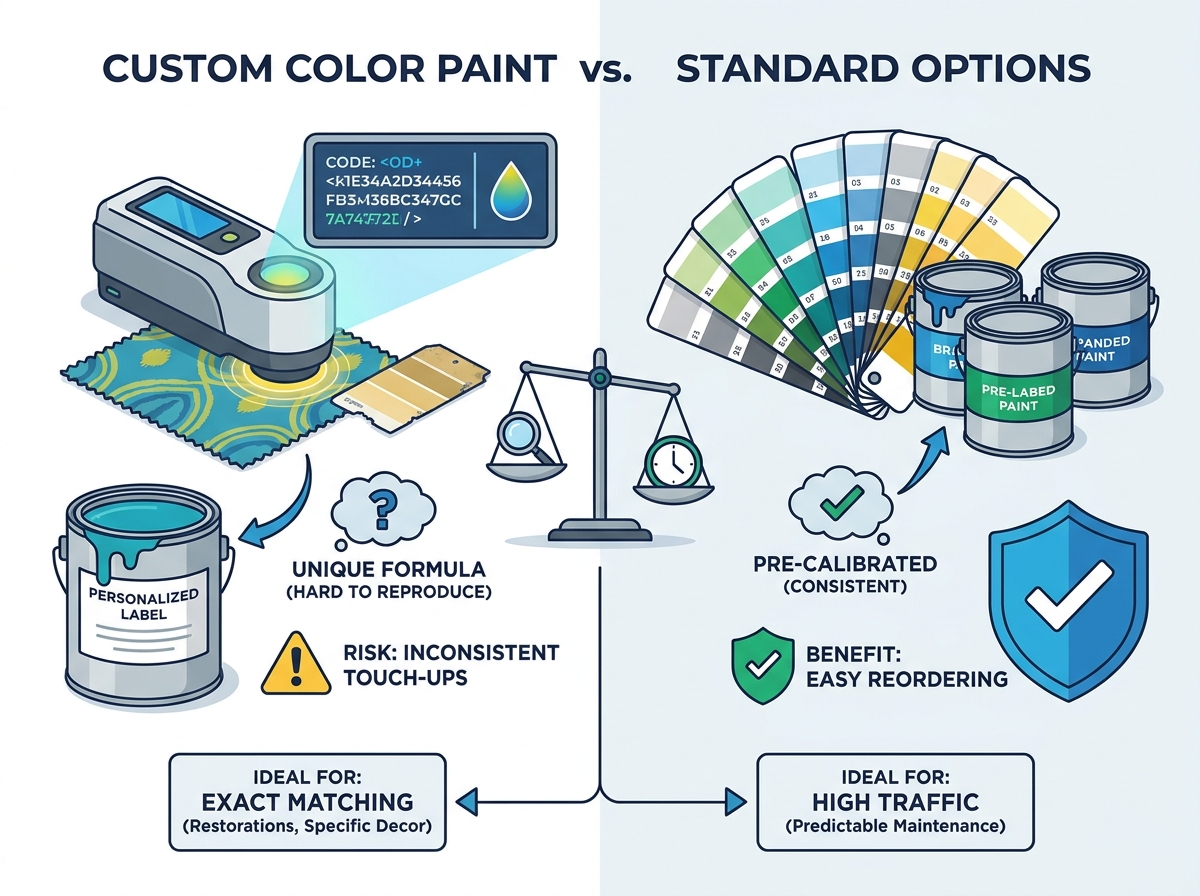
Sometimes standard options simply cannot capture your specific vision. This situation requires a completely different approach. Technicians create Custom color paint directly in-store. They use a specialized machine called a spectrophotometer. This machine reads a physical sample you provide. You might bring in a piece of fabric, an old paint chip, or a competitor's swatch.
The machine analyzes the sample and generates a unique tinting formula. However, this process involves distinct variables. It relies heavily on the precise calibration of local store equipment. The ultimate success also depends on the expertise of the technician mixing the bases and colorants. They must translate the digital reading into a physical reality. Human error and machine drift can occasionally influence the final result.
Core Evaluation Dimensions: Cost, Consistency, and Convenience
You must evaluate your options beyond mere visual appeal. Practical considerations often dictate the long-term success of your project. Let us examine the three core dimensions of this decision.
Upfront Cost vs. Long-Term Value
Many homeowners assume custom formulations carry a premium price tag. This assumption is generally incorrect. Standard colors and custom tints generally cost the same upfront. Most retailers do not charge extra for the mixing process itself. You simply pay for the quality tier of the base paint you select.
However, you must consider the long-term value and potential hidden expenses. Hidden costs in custom paint often arise from mis-tints. You might need to purchase extensive sampling pots to get the shade right. The most significant hidden cost occurs years later. You may have to repaint a whole wall if a future touch-up doesn't match perfectly. Standard paints dramatically reduce these hidden financial risks.
Reproducibility & Touch-Up Realities (The Biggest Risk)
Paint experiences wear and tear. You will eventually need to touch up scuffs, scratches, or drywall repairs. This reality highlights the most crucial difference between your options.
- Standard Paint Predictability: Standard colors offer unmatched peace of mind. You can buy a gallon of "Sherwin-Williams Alabaster" three years later, and it will match closely. You only need to account for standard UV fading over time. The chemical recipe remains identical in the manufacturer's system.
- Custom Paint Vulnerability: Reproducing a custom shade requires extreme diligence. If you lose the physical sticker with the custom formula code, reproducing the exact color is nearly impossible. Store databases routinely purge old records. You cannot rely on the retailer to remember your specific mix.
Procurement Speed
Time often dictates project momentum. Standard colors provide exceptional procurement speed. You can easily order standard colors online for quick, frictionless pickup. Contractors appreciate this efficiency when managing tight deadlines.
Custom colors demand a slower, more deliberate process. They require in-store visits and physical sample scanning. You must wait for manual adjustments by a technician. If the first scan fails, the technician must tweak the formula manually. This trial-and-error phase consumes valuable project time.
![Custom Color Paint Matching Process]()
The Technical Realities of Custom Color Matching (What Can Go Wrong)
Technology makes custom matching possible, but it is not flawless. You must understand the technical limitations before committing to a bespoke color. Several scientific factors can alter your final result.
The Spectrophotometer Margin of Error
Hardware stores use advanced optical equipment to read samples. While technology is advanced, these machines read the surface exclusively. This surface-level reading creates inherent vulnerabilities.
Texture on the original sample can severely skew the custom formula. A fuzzy piece of fabric reflects light differently than smooth drywall. Furthermore, invisible dirt or oils on an old paint chip will alter the machine's perception. The spectrophotometer attempts to match the dirt, not just the underlying pigment. This leads to slightly muddied final mixtures.
The Metamerism Effect (Lighting Shift)
Lighting profoundly impacts how our eyes perceive color. Professionals call this phenomenon metamerism. It represents the biggest hurdle in custom matching.
A Custom color paint matched flawlessly under fluorescent store lights may look entirely different at home. Once applied under the warm LEDs of a residential living room, the color shifts. Natural daylight streaming through a window changes the hue even further. What looked like a perfect navy blue in the store might appear distinctly purple on your wall. Standard colors undergo extensive testing to minimize these jarring metameric shifts.
Base Paint and Brand Translation Risks
Many buyers attempt to cross-match brands. They find a color they love from an expensive boutique brand. They ask a more affordable big-box store to recreate it. This strategy carries significant chemical risks.
Asking Brand A to match Brand B’s color using Brand A’s base and colorants rarely yields perfection. It often results in a 90-95% match, not 100%. Chemical compositions dictate how light reflects off the dried surface. Different brands use varying levels of titanium dioxide in their bases. Their proprietary colorants have different saturation levels. These underlying chemical differences prevent an absolute, flawless match.
Decision Framework: When to Choose Which Option
Choosing the right path requires analyzing your specific project needs. There is no universal correct answer. You must weigh your priorities against the limitations of each method. Below is a strategic breakdown to guide your choice.
When to Shortlist Custom Color Paint
Certain projects absolutely demand bespoke solutions. You should pursue custom matching in highly specific scenarios.
- Historical Restorations: Preserving a specific, non-standardized era-specific hue is often required by local historical societies. You cannot find these exact shades on modern retail shelves.
- Unknown Existing Walls: You may need to patch and match existing walls when the original paint brand is unknown. If you can peel off a physical chip, scanning it is your best option.
- Specific Design Visions: High-end interior design often anchors a room to a specific element. Achieving a highly specific interior design vision anchored to a custom textile, artwork, or cabinetry requires custom blending.
When to Rely on Standard Options
Convenience and durability often trump perfect design specificity. Standard palettes serve most residential needs exceptionally well.
- High-Traffic Areas: Hallways, kids' rooms, and commercial spaces endure heavy abuse. These spaces will require frequent, exact touch-ups over the years. Standard colors make this maintenance effortless.
- Exterior Projects: Sun exposure degrades pigments rapidly. Exterior painting projects are subject to heavy UV fading. Standard formulas are rigorously tested for exterior longevity and fade resistance.
- Investment Properties: Rental properties or quick house flips demand efficiency. Speed, scalability, and broad appeal are absolute priorities in these scenarios. Standard colors allow contractors to move quickly.
Decision Matrix: Standard vs. Custom Paint
| Project Scenario | Recommended Choice | Primary Reason |
| Matching an antique rug | Custom Color | Requires exact tonal alignment with unique textiles. |
| Painting a child's playroom | Standard Palette | Requires frequent, perfectly matched touch-ups over time. |
| Exterior house siding | Standard Palette | Pre-tested for maximum UV resistance and color retention. |
| Patching an unknown wall | Custom Color | Scanning a peeled chip is the only way to match old faded paint. |
Implementation Best Practices: Procuring and Testing Your Paint
Once you make your decision, execution matters deeply. Poor application or planning ruins even the best color choices. Follow these structured guidelines to protect your investment.
- Always Buy Samples First: Never commit to gallons of Custom color paint blindly. You must test the color in its final environment. Paint a large swatch on multiple walls in the actual room. Alternatively, use peel-and-stick sample paper to move the color around. Observe the sample during morning, noon, and evening light.
- Control the Sheen: Understand how gloss affects perception. Remember that matching a flat color chip into a high-gloss finish changes things. It will inherently change how dark or light the color appears. High gloss reflects more light, making colors appear slightly richer or darker than their flat counterparts.
- Document the Formula: Protect yourself against future headaches. Take a clear photo of the formula sticker on the lid of your custom paint. Email it to yourself immediately. Put the room name in the subject line for easy searching. Do not rely on the can surviving in the garage or the store remembering you. Labels fade, and cans rust over time.
- Order Strategic Overage: Batch inconsistency happens. Protect your walls by purchasing slightly more than you need. Box your paint before starting. This means you mix multiple gallons of the same custom color together in a large bucket before rolling. This eliminates minor batch-to-batch inconsistencies. Always keep a pint sealed tightly for future touch-ups.
Conclusion
The choice between custom formulations and standard palettes comes down to a fundamental trade-off. You must balance absolute design specificity against long-term maintenance predictability. Neither option is inherently wrong, but choosing the wrong one for your lifestyle causes immense frustration.
For most homeowners, utilizing a brand's extensive standard palette offers the lowest risk and highest consistency. It ensures your walls look great today and remain easy to fix tomorrow. However, when a project demands a hyper-specific match, custom matching is a powerful tool. It works beautifully provided you understand its technical limitations and document the formula rigorously.
Evaluate your project's touch-up likelihood before making a purchase. Gather your physical swatches, and visit your local paint retailer. Test standard chips against your intended custom match. Always paint a sample on your wall before committing to a full-volume order.
FAQ
Q: Does custom color paint cost more than standard paint?
A: No, most major retailers do not charge an additional fee for color matching or mixing. You simply pay for the tier of the base paint you select. Premium bases cost more, but the customization service itself is typically complimentary.
Q: Can a paint store perfectly match a competitor's standard color?
A: It can get very close, usually achieving 95% accuracy. However, because different brands use different proprietary colorants and base formulas, a 100% identical match is rarely guaranteed under all lighting conditions.
Q: How long do paint stores keep my custom color formula on file?
A: Retention policies vary wildly by brand and local franchise. They range from a few months to a few years. Never rely on the store's database. Always photograph the formula label printed on your paint can and back it up digitally.
Q: Why does my custom matched paint look different on the wall than on the sample?
A: This is usually due to metamerism, which means lighting conditions in your home differ from the store. Additionally, the sheen of your chosen paint or the physical texture of your wall heavily affects how light is absorbed and reflected.