Have you ever bought a shimmering medium only to find it looks like cheap glitter? Countless buyers face this exact frustration when purchasing pearlescent products. They expect a smooth, luminescent glow. Instead, they receive patchy, lackluster coverage. Evaluating these products requires looking far beyond flashy marketing labels. You must thoroughly understand binder ratios. You need to distinguish between genuine mica and synthetic pigments. You also must grasp core optical properties. Relying solely on the front of a tube often leads to disappointing project results.
Our goal is to provide a hard-skills evaluation framework for you. We will help artists, fluid pourers, and crafters confidently select the right formulation. You will learn how to match specific paint characteristics to your precise project requirements. Ultimately, this guide equips you to make informed, professional-grade purchasing decisions. It will save you time and preserve your creative vision.
Key Takeaways
- True acrylic pearl paints rely on mica particles, not metallic flakes, meaning they are inherently semi-transparent and highly dependent on base-coat colors.
- Viscosity and pigment load must match the application; fluid arts require high-binder formulations to prevent "muddying," while heavy-body applications need dense mica suspension.
- Lightfastness (fade resistance) and toxicity (safety compliance) vary significantly between student-grade craft paints and professional-grade acrylics.
- The most common purchasing mistake is confusing metallic, iridescent, and pearl specifications, leading to mismatched finishes and poor light refraction.
The Core Mechanics: Mica Pigments vs. Traditional Metallics
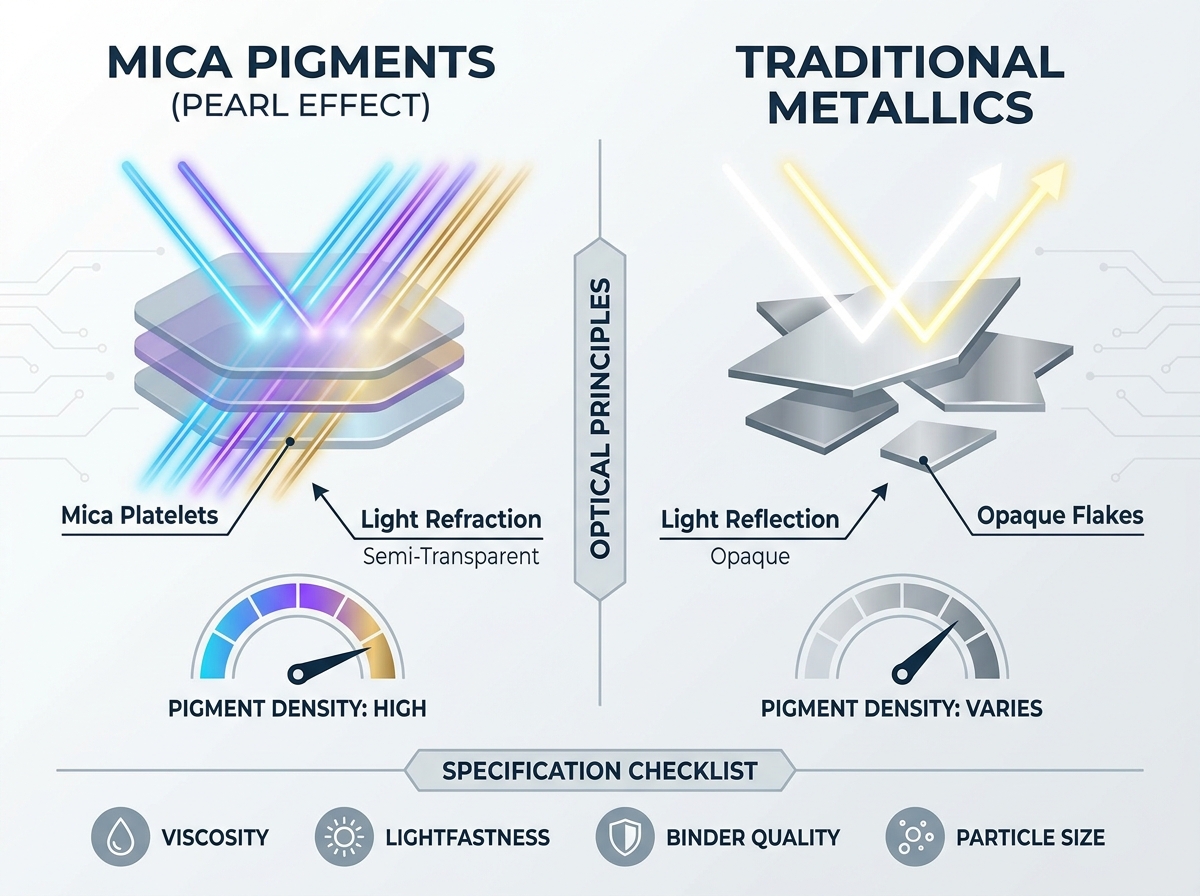
To understand how these products work, you must examine their core optical mechanics. Most traditional metallic formulas use actual ground metal flakes. These flakes reflect light directly back to your eye. They act like tiny, solid mirrors embedded in the medium. However, pearl formulas operate quite differently. They refract light rather than just reflecting it. Manufacturers create this stunning effect using microscopic mica platelets. They carefully coat these platelets with layers of titanium dioxide. When light hits the painted surface, it bends and scatters. This bending creates a soft, luminous shift in color. It gives the artwork a deep, glowing quality.
Transparency is a crucial feature, not a manufacturing flaw. Many users complain about poor coverage. They expect opaque results from a pearl medium. However, you must realize they are structurally semi-transparent. The mica particles desperately need clear space to refract light properly. If manufacturers made the formula fully opaque, it would block incoming light entirely. The beautiful shimmer would completely disappear. You must set realistic expectations for your project. You will need multiple coats or a solid base color to achieve optimal results.
You also need to distinguish between standard pearl bases and interference colors. A standard pearl base usually appears white or silver in the tube. It provides a uniform, delicate glow across the entire surface. Interference colors function entirely differently. They shift dramatically depending on your viewing angle. They also change radically based on the background color. An interference blue might look completely invisible on a white canvas. Put it over a dark background, and it bursts into vibrant, glowing color.
![Acrylic pearl paint shimmering texture on a palette]()
Critical Specifications to Evaluate Before Purchasing
Pigment Density and Particle Size
Pigment density directly dictates the intensity of your shimmer. Finer mica particles create a smooth, continuous satin luster. They blend seamlessly into the surrounding polymer binder. Larger particles behave completely differently. They create a sparkly, highly granulated visual effect. Some artists highly prefer this textured, dramatic look. How do you check for actual pigment load? You can often judge by the physical tube weight. Professional-grade paints weigh noticeably more because genuine mica is dense. Craft grades feel incredibly light due to added cheap fillers. Always check if the label specifies professional grading. High pigment density ensures maximum light refraction.
Viscosity and Binder Quality
Viscosity determines how the medium flows off your brush. You must evaluate the binder quality carefully before buying. Heavy body formulas hold stiff peaks beautifully. They retain your distinct brushstrokes perfectly on the canvas. However, overworking them can quickly dull the desired pearl effect. The mica particles get trapped in chaotic, uneven angles. Fluid or high-flow acrylics behave much better in this regard. They maintain internal pearl integrity easily. They allow the mica platelets to lay perfectly flat and align. This horizontal alignment maximizes the stunning optical shift. However, fluid formulas require robust polymer binders. Weak binders allow the dense pigments to sink out of sight.
| Viscosity Type | Binder Strength Needed | Best Application | Optical Shift Quality |
| Heavy Body | Medium to High | Impasto, textured fine art | Moderate (can scatter light if overworked) |
| Soft Body | High | Standard brushwork, glazing | Excellent (allows mica to lay flat) |
| High Flow / Fluid | Very High | Acrylic pouring, airbrushing | Maximum (highest refraction potential) |
Lightfastness and Archival Quality
You undoubtedly want your artwork to last for generations. Fading is a massive issue when using cheap synthetic pigments. You must strictly check for ASTM I or ASTM II ratings. These specific ratings guarantee excellent, long-term lightfastness. Some high-end brands use their own proprietary permanence rating systems. You should learn how to read them before making a purchase. Marketplace listings often boast vague "Non-Fading" claims. You should treat these bold claims with extreme skepticism. Verify true archival integrity by checking the manufacturer's technical data sheet online.
Toxicity and Safety Compliance
Safety should always remain your absolute top priority. You must look for the AP (Approved Product) seal on the label. The ACMI seal is another vital safety indicator. These certifications medically prove the product is non-toxic. This verification is critical for high-contact crafts. It is even more important for popular fluid art techniques. Many fluid artists use heat guns or butane torches. Heating unapproved polymers can release dangerous, invisible fumes. Protect yourself by verifying safety compliance beforehand. Never compromise on certified health standards.
Matching Paint Specifications to Your Success Criteria
Fluid Art and Acrylic Pouring
Fluid art presents unique chemical challenges for pearlescent mediums. The success criteria demand extreme stability. Your paints must survive rigorous mixing processes. They cannot lose their shimmer when added to aggressive pouring mediums. Products like Floetrol or Liquitex can easily dilute weak pearls. What should you buy? You must look for high-flow formulations. You need robust polymer binders. Strong binders actively prevent the dreaded "cell sinking" effect. They keep the heavy mica suspended evenly throughout the pour. Follow these steps for perfect fluid mixing:
- Pour your chosen medium into a clean mixing cup.
- Add the pearlescent color slowly in small increments.
- Stir gently to avoid trapping excess air bubbles.
- Let the mixture sit for five minutes before pouring.
Fine Art and Brushwork
Traditional canvas brushwork requires absolute control over the medium. The success criteria revolve around a flawlessly smooth application. Visible, streaky brushmarks disrupt the delicate pearl reflection. Uneven surfaces scatter light poorly and destroy the illusion. What should you buy? You should choose soft-body or fluid formulas. They level out naturally as they dry on the canvas. You should avoid heavy-body versions unless you modify them intentionally. You can mix them safely with a gloss glazing liquid. This specific modification helps the heavy paint level perfectly. It restores the smooth, refractive surface you need.
3D Crafts, Wood, and Resin Accents
Crafters often apply shimmering accents to highly unconventional surfaces. The success criteria here focus entirely on durability. High surface adhesion is absolutely non-negotiable. The paint must fiercely grip wood, cured resin, or smooth plastic. It must also remain fully compatible with protective top varnishes. What should you buy? You should seek multi-surface craft pearls. Check specifically for moisture-resistant technical specifications. Ensure they are fully non-toxic for home crafting environments. Proper surface preparation guarantees a lasting, brilliant finish.
Implementation Realities: Hidden Risks and Common Pitfalls
Even the finest paints fail miserably if used incorrectly. You must watch out for several hidden technical risks. First, strictly avoid the dreaded glitter trap. Cheap brands often substitute actual mica powder with cut micro-plastics. They use ultra-fine glitter to falsely mimic the pearl effect. This substitution results in a gritty, unpleasant tactile texture. It also causes severe adhesion failures over time. You should always check the manufacturer's precise ingredients list. If it mentions polyester flakes, put the tube back.
Second, you must respect the absolute base-coat dependency. Using high-quality Acrylic pearl paint over a stark white base yields a subtle shimmer. It looks delicate, frosty, and angelic. Applying it over a solid black base changes everything completely. The dark background aggressively absorbs stray, un-refracted light. This absorption reveals the maximum refractive color of the suspended mica. You must plan your base layers strategically. The background dictates the entire final mood of the piece.
Third, beware of catastrophic varnish incompatibility. This remains a heartbreaking mistake for many emerging artists. Using a matte varnish over your dried artwork is disastrous. The microscopic matting agents scatter light haphazardly in all directions. This scattering will instantly kill the delicate pearlescent effect. Your glowing masterpiece will turn dull and milky. You must only use gloss or high-gloss isolation coats. Gloss finishes enhance the delicate refraction rather than destroying it. They act like a clear glass window over the mica.
Shortlisting Logic: Making Your Final Decision
How do you make your final, confident purchasing decision? You should follow a strictly logical shortlisting process. For professional or archival gallery work, strictly prioritize transparency. Look for reputable brands offering exact pigment identification codes. For example, PW20 officially indicates genuine, unadulterated mica. Seek out transparent permanence ratings directly on the packaging. Brands like Amsterdam Pearl colors or Golden consistently excel here. They proudly provide full technical disclosure for professional artists. You always know exactly what you are buying.
For high-volume or daily practice projects, shift your focus slightly. Evaluate mid-tier brands based heavily on binder quality. Do not just look at the raw price-per-ounce. A cheap, watery paint that sinks immediately is entirely worthless. Look for the phrase "mica-based" explicitly stated in the technical data sheet. If the data sheet is missing, avoid the brand.
Next-Step Action: Never buy massive bulk sets immediately. We strongly recommend testing a single tube of a chosen brand first. Swatch it carefully over both black and white backgrounds. Evaluate the dried results in natural sunlight. Check for grittiness and true light refraction. Only commit your budget once the sample passes your strict visual tests.
Conclusion
Mastering pearlescent mediums requires more than just choosing a pretty color. Buying these paints is fundamentally an exercise in managing transparency and manipulating light. You must evaluate the core binder strength and the actual pigment origin. Ignore vague, flashy marketing terms like "ultra-shiny" or "magic glow." Instead, base your purchase decision strictly on verified pigment sources and proper viscosity. Match the binder density to the specific physical demands of your project. By following this technical framework, you guarantee luminous, professional, and highly durable results every single time.
FAQ
Q: Can I mix acrylic pearl paint with standard matte acrylics?
A: Yes, you can mix them safely. However, doing so will significantly diminish the pearlescent effect. The opaque pigments in matte mediums easily block the light meant for the mica particles. It is much better to use the pearl medium as a thin glaze over dried matte colors.
Q: Why does my pearl acrylic paint look chalky when it dries?
A: This chalky finish is usually caused by over-thinning the medium with plain water. Excessive water breaks the polymer binder. It can also happen if you use a low-quality brand containing high filler or chalk content. Always use a proper acrylic medium to thin your colors instead of water.
Q: Do I need a special primer for acrylic pearl paint?
A: No special chemical primer is strictly required. However, applying an opaque base coat is highly recommended. Using black or dark base colors will dramatically maximize the optical shift of the mica. A solid base provides the necessary contrast for the refraction to stand out.
Q: Is acrylic pearl paint toxic if heated?
A: While standard formulas are mostly non-toxic at room temperature, heating them is dangerous. Torching them during pour painting can release harmful chemical fumes from the polymer binders. You must always check for non-toxic certifications. Always work in highly ventilated areas when applying any heat.