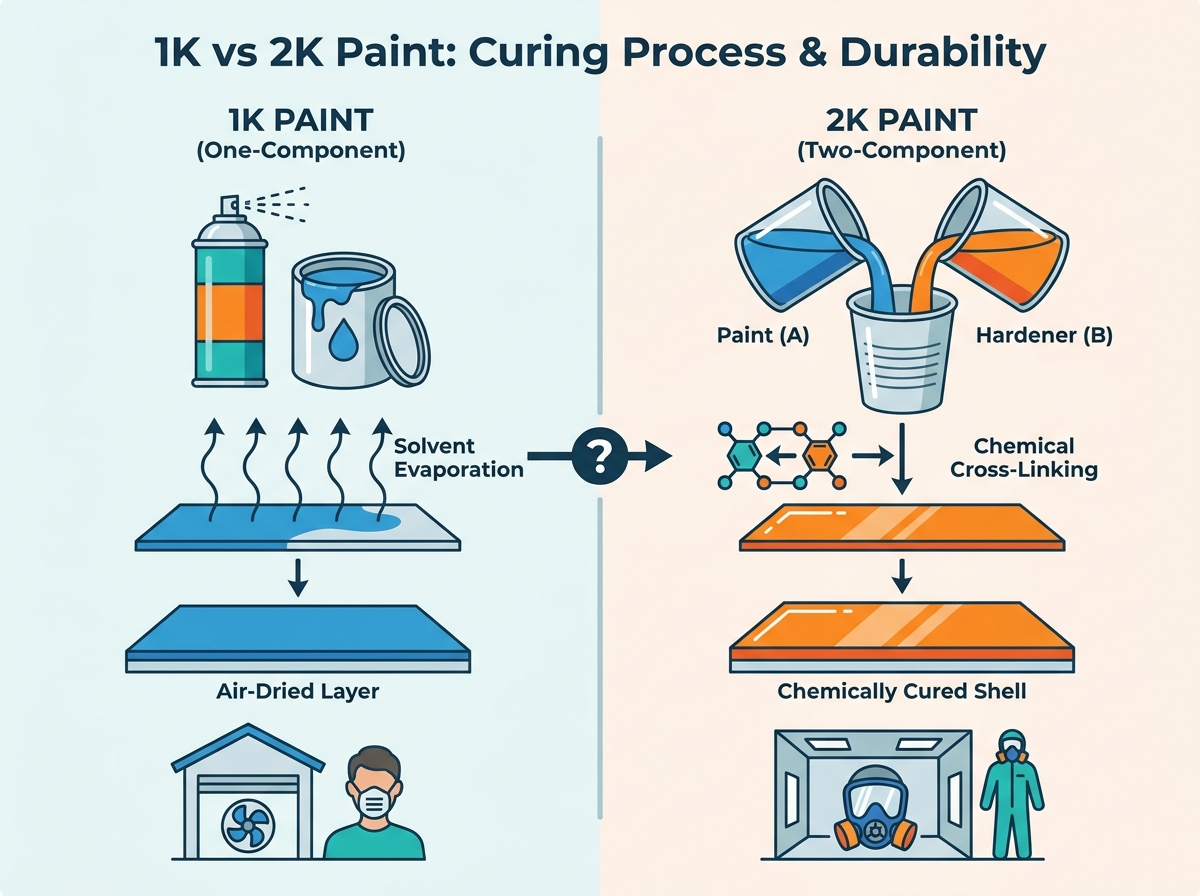
You spend hours carefully prepping a delicate surface. Suddenly, the entire finish fails within a few weeks. Choosing the wrong paint system often leads to severe peeling, permanent chemical damage, or extremely costly rework. Automotive and industrial finishes fundamentally rely on exactly how they cure. Simple solvent evaporation drives the curing process in standard 1K systems. Conversely, a complex chemical cross-linking reaction dictates true 2K performance.
We will break down both paint systems strictly based on objective facts. You will learn how to properly evaluate long-term durability, assess practical application risks, and understand rigid safety requirements. This comprehensive breakdown ensures you make a highly informed decision tailored directly to your specific project needs. We eliminate the guesswork completely so you can spray your next project confidently.
Key Takeaways
- 1K Paint offers maximum convenience and safety for DIY environments but lacks the chemical and UV resistance required for high-wear or exterior automotive surfaces.
- 2K Paint delivers professional-grade durability and hardness through chemical activation but requires stringent safety gear, proper ventilation, and strict time management (pot life).
- For optimal results, industry standard practice often involves pairing a 1K color paint base coat with a high-quality 2K clear coat.
- The deciding factor depends entirely on your project scope: shop capabilities, budget, and environmental exposure.
Understanding the Core Chemistry: 1K vs. 2K
What is 1K Paint?
The term "1K" simply stands for one-component paint. It requires no hardener, activator, or secondary catalyst to function. You apply it directly from the can or spray gun. The entire curing process relies purely on solvent or water evaporation. As the liquid carriers evaporate into the air, the solid pigments and resins remain on the surface. They dry to form a solid film.
Industry standard 1k color paint specifications highlight several user-friendly traits. These products arrive ready-to-spray. They often come in convenient aerosol cans for quick touch-ups. They boast an unlimited pot life. You can open a tin, use a small amount, seal it tightly, and store it for months. They offer exceptional ease of use for beginners.
Best Practice: Always allow adequate flash time between coats when spraying 1K products. Rushing the process traps solvents underneath the top layer. This causes bubbling and prolongs the overall drying time significantly.
What is 2K Paint?
The term "2K" designates a two-component system. This paint cannot cure on its own. It requires a dedicated chemical hardener or activator. You must mix the two components precisely before application. Once combined, they trigger an exothermic cross-linking reaction. This chemical process binds the molecules together permanently.
This reactive nature introduces a strict pot life. You must use the mixed paint within a few hours. Once the chemical reaction begins, it cannot be stopped. The paint will eventually harden inside your spray gun if left uncleaned. 2K paints feature a much higher solids content compared to 1K. They build thicker layers quickly. They create a permanent structural bond that resists shrinking over time.
| Feature | 1K Paint System | 2K Paint System |
| Curing Mechanism | Solvent or water evaporation | Chemical cross-linking (hardener) |
| Pot Life | Unlimited (can be resealed) | Strictly limited (1 to 4 hours) |
| Solids Content | Low to Medium | High |
| Application Method | Aerosol or HVLP Gun | HVLP Gun (requires mixing cups) |
![1k color paint application and finishing]()
Performance & Durability Showdown
Scratch and Impact Resistance
The cross-linking chemical bond in 2K paint creates a dense, non-porous shell. The molecules lock together tightly. This forms a hardened surface layer. It aggressively resists mechanical abrasions, rock chips, and general road wear. Modern automotive factory finishes rely exclusively on these two-component systems for this exact reason. They withstand the daily abuse of highway driving.
Conversely, 1K paint remains relatively soft even after fully drying. The lack of chemical cross-linking means the resin structure stays somewhat flexible and porous. It remains highly susceptible to mechanical wear over time. If you drop a wrench on a 1K painted bracket, it will likely chip deeply. A 2K coated bracket might only show a superficial scuff.
Chemical and Weather Resistance
Automotive and motorcycle projects demand extreme chemical resistance. You inevitably spill fuel, brake fluid, or harsh degreasers onto painted surfaces. Spilled gasoline will melt right through a 1K finish. The solvents in the fuel re-liquefy the dried 1K paint immediately. The finish will lift, wrinkle, and peel away. Cured 2K paint repels these exact same chemicals seamlessly. Fuel sits harmlessly on a 2K surface until you wipe it away.
This dynamic heavily influences the ongoing 1k clear coat vs 2k debate. UV radiation destroys unprotected base coats rapidly. A 1K clear coat provides minimal ultraviolet protection. It eventually clouds, yellows, or flakes off under intense sunlight. A 2K clear coat remains absolutely non-negotiable for exterior automotive panels. It locks out oxygen, prevents oxidation, and provides a brilliant, long-lasting gloss.
Implementation Realities: Application & Equipment Needs
Tooling and Setup
Simplicity defines the 1K application process. You can access professional-looking results using standard high-quality spray cans. Entry-level HVLP (High Volume Low Pressure) guns also work beautifully. You need minimal setup. You simply stir or shake the product, strain it into the gun, and spray. Cleanup involves running some basic thinner through the nozzle.
Applying 2K paint demands rigorous preparation. You cannot guess the ratios. You must use precise measuring cups. The manufacturer specifies exact mixing ratios, such as 4:1:1 (paint, hardener, reducer). Changing these ratios guarantees failure. You need specialized spray guns capable of atomizing high-solids material. You also need a highly controlled painting environment.
Common Mistake: Spraying 2K clears in a dusty garage often ruins the final finish. 2K products require longer flash-off periods between coats. They remain tacky longer. Any airborne dust will settle permanently into the clear coat.
Time and Temperature Sensitivity
The concept of "pot life" strictly governs 2K applications. Once you mix the hardener into the paint, a countdown clock starts immediately. You usually have between one and four hours to spray the material and clean your equipment. If you take a long break, the paint will turn into a solid block of plastic inside your expensive spray gun.
Ambient temperature drastically affects these 2K curing times. Heat accelerates chemical reactions. Cold environments slow them down. Paint manufacturers solve this by offering different speed hardeners.
- Fast Hardeners: Ideal for spot repairs or cold shop temperatures (below 65°F).
- Medium Hardeners: Used for standard panel painting in average conditions (70°F to 80°F).
- Slow Hardeners: Necessary for full vehicle resprays or hot summer days (above 85°F).
Safety & Compliance: The Hidden Costs of 2K
Toxicity and PPE Requirements
You must understand the severe health risks associated with 2K hardeners. They contain toxic chemicals called isocyanates. These compounds trigger severe respiratory sensitization, asthma, and severe allergic reactions. They enter your body through inhalation or direct skin absorption. Standard paper dust masks offer absolutely zero protection against isocyanate vapors.
You must implement mandatory safety protocols before mixing or spraying any 2K material. Follow this strictly required PPE checklist:
- Respiratory Protection: Use a well-fitted full-face organic vapor respirator. A fresh-air supplied respirator system is the safest professional standard.
- Skin Protection: Wear a full-body Tyvek paint suit. Leave zero skin exposed to the overspray.
- Hand Protection: Wear thick nitrile gloves. Tape the wrists closed to prevent vapor ingress.
- Eye Protection: If using a half-mask respirator, wear completely sealed safety goggles.
These rigid safety requirements frame 1K as a significantly safer option for average home-garage DIYers. If you lack proper downdraft ventilation and supplied-air systems, spraying 1K significantly reduces your personal health risks.
Decision Framework: Choosing the Right System
When to Specify 1K Paint
You should specify 1K paint for low-impact, interior, or decorative components. It works exceptionally well for interior cabin parts, dashboard trim, and speaker bezels. You can use specialized heat-rated 1K aerosols for engine bay accents and brackets. It remains the best choice for quick, temporary touch-ups on minor scratches.
Budget-constrained projects heavily favor 1K products. Applications in standard residential garages without industrial ventilation also mandate 1K usage. You save money on hardeners, specific reducers, and expensive safety equipment. You trade ultimate durability for safety, cost savings, and convenience.
When to Specify 2K Paint
You should always specify 2K paint for surfaces exposed to harsh elements or chemicals. Complete automotive exterior resprays require a 2K finish. Motorcycle gas tanks demand 2K to survive inevitable fuel spills. Alloy wheels need the chip resistance of 2K to withstand road debris and harsh brake dust cleaners. Industrial equipment and heavy machinery also rely on this durability.
Choose 2K for projects where long-term return on investment outweighs the upfront costs. The initial chemical and equipment expenses run higher. However, you avoid repainting the vehicle three years later. The permanent gloss retention and scratch resistance justify the added effort.
The Hybrid Approach (Base/Clear)
Modern professional refinishing rarely relies entirely on a single system. The industry standard utilizes a highly effective hybrid approach. Painters lay down a 1K color paint base coat first. This base coat evaporates quickly. It makes color matching easier. It allows metallic flakes to lay down evenly without migrating.
Once the base coat flashes off properly, you lock it in. You apply two to three heavy coats of a 2K clear coat over the top. This clear coat provides all the structural integrity, UV protection, and chemical resistance. You get the easy application of a 1K color base combined with the impenetrable armor of a 2K top layer.
Conclusion
Choosing your paint system dictates the lifespan of your finish. You should select 1K products for ultimate convenience, ease of use, and low-impact areas. You must choose 2K systems for professional-grade durability, exterior UV protection, and absolute chemical resistance.
Never cut corners when selecting your clear coat. You should always lean toward a 2K clear if your safety equipment and workspace permit it. Always carefully align your chemical choices with your available personal protective equipment.
Take inventory of your shop ventilation and safety gear today. Review the technical data sheets for proper mixing ratios. Browse high-quality base coats, dedicated clear kits, and organic vapor respirators to begin planning your next flawless paint job.
FAQ
Q: Can I spray a 2K clear coat over a 1K color paint?
A: Yes. This remains the absolute industry standard for modern Base/Clear paint systems. You must ensure the 1K base coat is fully flashed and dry before applying the 2K clear. Rushing this step causes severe solvent entrapment, leading to peeling and bubbling.
Q: What happens if I spray 1K over 2K?
A: It is generally safe if the underlying 2K is fully cured and properly scuffed for adhesion. However, doing so severely compromises the overall durability of your top layer. The 1K surface remains vulnerable to scratches and chemical melting.
Q: Can I use a 2K paint without a hardener?
A: No. Without the required chemical activator, 2K paint will never chemically cure. The liquid will remain a sticky, gummy, unusable mess indefinitely. You will have to strip it completely off the surface using heavy solvents.
Q: Is 1K paint fuel resistant?
A: No. Standard 1K aerosols and brush-on paints offer zero chemical resistance. They will rapidly lift, wrinkle, or dissolve completely when exposed to gasoline, brake fluid, or harsh industrial degreasers.