Choosing between single-component and two-component systems dictates the entire trajectory of your auto restoration. It influences not just the final finish of your project, but its long-term longevity, strict application requirements, and essential safety protocols. Making a quick choice without understanding the underlying chemistry often creates major headaches down the road. DIYers and professional auto body shops alike frequently weigh the convenience of ready-to-spray formulas against the intense chemical durability of hardener-activated systems. Selecting the wrong paint type regularly leads to premature sun fading, sudden chemical peeling, or simply wasted expensive materials. We designed this article to provide an objective, technical comparison. This detailed guide will help you evaluate which specific paint system aligns best. You can match the optimal choice directly to your current spray equipment, your workshop's safety setup, and your ultimate durability requirements. Read on to master these critical differences.
Key Takeaways
- 1K Car Paint dries through solvent evaporation, making it convenient and easy to use, but it remains susceptible to chemical damage (like gasoline spills) and heavy UV exposure.
- 2K Car Paint cures via a chemical reaction with a hardener, resulting in a highly durable, scratch-resistant, and professional-grade finish.
- Safety requirements differ vastly; 2K paints typically contain isocyanates, requiring specialized personal protective equipment (PPE) and ventilation that standard 1K applications do not.
- Project scope dictates the choice: 1K is ideal for interior parts, quick touch-ups, or budget projects, while 2K is mandatory for full exterior panels and high-grade clear coats.
Understanding the Chemical Mechanics: Drying vs. Curing
The Mechanics of 1K Car Paint
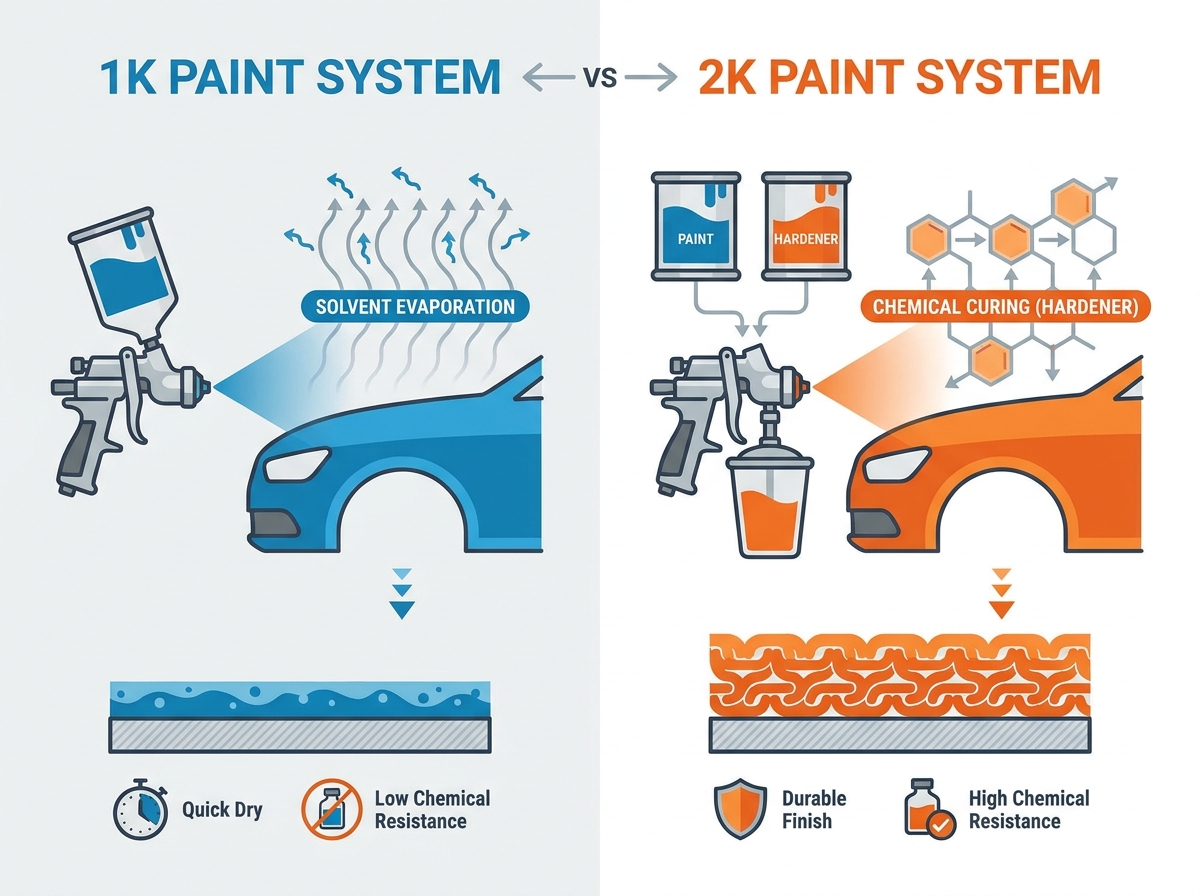
A single-component system functions entirely via solvent evaporation. You spray the liquid onto the automotive panel. The carrier solvents slowly flash off into the surrounding atmosphere. Once the solvents evaporate, the remaining resins and pigments lay flat and form a dry film on the surface. Using 1K Car Paint requires absolutely no mixing of catalysts or hardeners. You can pour it straight from the tin into your spray gun cup.
This evaporation process leaves the paint technically reversible. The binder resins act as a thermoplastic material. You can reactivate the dried surface months later using a strong solvent. If you wipe a cured single-component finish using heavy lacquer thinner, the paint will soften, smudge, or strip away completely. This reversibility makes corrections easy during application but limits long-term chemical resilience.
The Mechanics of 2K Car Paint
Two-component systems function through an entirely different chemical pathway. They require a precise volume ratio of base paint to an activator or hardener. You must measure these parts exactly before spraying. Once mixed, the activator triggers cross-linking polymers. This creates a permanent chemical reaction rather than simple evaporation.
This process is called curing. The paint transitions into a thermosetting plastic. It becomes completely irreversible once fully cured. The cross-linked molecules bind together to create a rigid, impenetrable shell over the vehicle panel. You cannot melt or reactivate a cured two-component finish using standard shop solvents. It requires heavy mechanical sanding or highly aggressive aircraft-style chemical strippers to remove.
Performance and Durability Evaluation
Chemical and Spill Resistance
Fluid resistance dictates the practical longevity of any automotive finish. You must evaluate how single-component formulas break down when exposed to harsh automotive fluids. Brake fluid, degreasers, and raw gasoline easily compromise a single-component finish. A small fuel spill near a gas cap can wrinkle or lift a single-stage aerosol paint job within minutes.
Two-component systems remain largely inert post-cure. They offer true OEM-level resistance to harsh shop chemicals. You can wipe spilled gasoline or heavy-duty degreasers off a cured two-component clear coat without dulling the gloss or softening the finish. This chemical immunity makes it the mandatory choice for motorcycle gas tanks, engine blocks, and frequently washed exterior panels.
UV Stability and Weathering
Constant sunlight destroys unprotected automotive surfaces. We look closely at oxidation rates to judge paint quality. Single-component clear coats generally yellow or peel faster under intense UV light. Their weaker molecular structure allows UV radiation to penetrate and break down the underlying basecoat over time.
A high-quality two-component clear coat provides long-term UV protection. The dense polymer network blocks harmful rays effectively. It prevents basecoat degradation on high-exposure panels like hoods, roofs, and trunk lids. Vehicles parked outdoors year-round heavily rely on this robust UV stability to maintain their showroom shine.
Scratch and Impact Resistance
Road debris and mechanical washing inflict daily damage on vehicle exteriors. We compare the surface hardness and elasticity of both systems to measure impact resistance. Single-component products remain relatively soft. They scratch easily under the friction of automated car wash brushes or coarse drying towels.
Two-component finishes offer superior surface tension and hardness. The cured shell deflects minor abrasions. It also retains enough structural elasticity to absorb minor stone chips without shattering or flaking. You can aggressively compound and polish a two-component clear coat to remove superficial scratches without burning through the material.
Performance and Durability Comparison Chart
| Performance Metric | Single-Component (1K) | Two-Component (2K) |
| Chemical Resistance | Low. Softens when exposed to gasoline or brake fluid. | High. Inert to most harsh automotive fluids. |
| UV Stability | Moderate. Prone to faster fading and yellowing. | Excellent. Offers long-term OEM-level UV blockage. |
| Scratch Resistance | Low. Scuffs easily during standard washing. | High. Can be wet-sanded and machine polished. |
| Reversibility | Yes. Dissolves with strong shop solvents. | No. Forms a permanent thermosetting plastic shell. |
![1K vs 2K Car Paint application equipment and spray gun setup]()
Implementation Realities and Application Constraints
Equipment and Setup Requirements
Accessibility drives many DIY restoration choices. Single-component options offer an incredibly low barrier to entry. You can source them easily via standard aerosol cans. If you prefer using bulk material, basic HVLP spray guns paired with standard home garage compressors work perfectly. You do not need expensive moisture traps or high-volume air lines to achieve a decent finish.
In contrast, two-component paints demand strict environmental and equipment controls. You must adhere to specific compressor CFM (Cubic Feet per Minute) ratings for proper fluid atomization. Common setup requirements include:
- Precise measuring cups to ensure exact activator ratios.
- High-flow air compressors to prevent pressure drops during continuous spraying.
- In-line desiccant dryers to eliminate air hose moisture.
- Strict temperature and humidity control in the booth to prevent clouding or blushing in the clear coat.
The "Pot Life" Factor
Pot life refers to the usable liquid lifespan of a mixed product. Single-component products offer an indefinite pot life. You can pour the unused basecoat back into the original tin, seal the lid, and store it for months. This allows for relaxed, multi-day applications without generating material waste.
Two-component systems introduce strict timeline constraints. Once you mix the hardener into the base material, the irreversible chemical reaction begins immediately. You now face a limited application window. Depending on shop temperature and the specific activator speed, you usually have between 2 and 12 hours before the product solidifies. If you ignore this window, the paint hardens directly inside your expensive spray gun, effectively ruining the equipment.
Flash Times and Sanding
Wait times between coats heavily impact your workflow. Single-component products flash quickly but take considerable time to release all deeply trapped solvents. While they feel dry to the touch rapidly, they often remain too soft for aggressive color-sanding or machine buffing for several weeks.
Two-component systems chemically cure from the inside out. You must follow the technical data sheet for flash times between coats to prevent solvent pop. However, once the curing cycle finishes, you can safely wet-sand and buff the surface. In a temperature-controlled booth, many painters cut and polish the clear coat within 24 to 48 hours post-application.
Safety, Toxicity, and Compliance Risks
Isocyanates in 2K Systems
Safety protocols represent the most critical difference between these systems. Activators used in two-component products typically contain isocyanates. These chemical compounds carry severe health risks when aerosolized. Isocyanates actively target the respiratory system and can trigger permanent asthma-like conditions upon minor exposure.
Standard N95 dust masks provide zero protection against atomized isocyanates. Even basic organic vapor masks eventually fail to filter out these specific hardener chemicals safely. Due to these extreme hazards, supplied-air respirators and full skin coverage remain the mandatory industry standard for application. You must prevent isocyanates from entering your lungs, eyes, or absorbing through exposed skin.
1K Safety Protocols
Single-component systems bypass the isocyanate danger, but they still pose health risks. They contain high levels of Volatile Organic Compounds (VOCs). These carrier solvents evaporate into the air during application and drying.
Standard safety protocols still apply here. You must establish strong cross-ventilation in your workspace to exhaust the fumes. Using a high-quality organic vapor respirator equipped with fresh carbon cartridges provides adequate protection against these specific solvent risks. You should also wear nitrile gloves and basic paint suits to prevent direct skin irritation.
Environmental Compliance
Environmental agencies heavily monitor paint emissions. Local regulations, such as specific EPA mandates or strict CARB (California Air Resources Board) rules, frequently restrict the sale of certain high-VOC automotive products.
Many regions prohibit the application of solvent-heavy single-component and two-component paints in residential areas. Authorities often require specialized filtration booths to capture airborne particulates and VOCs before they enter the outside atmosphere. You must verify your local municipality rules before purchasing large quantities of solvent-based materials for a home garage project.
Decision Framework: Shortlisting the Right Paint for Your Scope
When to Specify 1K Car Paint
You should match the chemical system directly to the demands of your specific component. Single-component options shine in low-impact areas. We recommend using them for interior dashboard brackets, inner door shells, or hidden trunk panels. They also perform beautifully for minor bumper scuff touch-ups or temporary rust repairs where budget remains the primary concern.
High-temperature rated single-component products work well for engine bay accents and exhaust brackets. Ultimately, choose this route for projects strictly limited by budget constraints or a lack of professional supplied-air PPE and high-CFM compressors.
When to Mandate 2K Car Paint
Exterior panels endure punishing daily abuse. You must mandate two-component materials for full exterior panel resprays or complete classic vehicle restorations. They guarantee the structural integrity required to survive decades on the road.
All primary clear coat applications demand two-component systems if long-term gloss retention is your metric for success. Furthermore, any project where chemical resistance is absolutely non-negotiable requires a hardener. Painting a motorcycle gas tank with a single-component finish practically guarantees failure during the very first fuel spill.
Cost-to-Value ROI
Evaluating the financial return on investment requires looking past the initial price tag. Single-component products and their associated application tools cost significantly less upfront. You avoid buying expensive hardeners, high-end spray guns, and supplied-air systems.
However, you must factor in the heavy cost of rapid failure. Redoing a peeling, sun-faded single-component job after just one year of UV exposure destroys any initial savings. To calculate the true ROI, follow these steps:
- Assess the expected lifespan of the vehicle.
- Calculate the upfront cost of two-component materials versus single-component tins.
- Estimate the labor hours required to strip and repaint a failed finish.
- Compare the total investment of doing the job right once versus doing it poorly twice.
Two-component systems vastly outperform cheaper alternatives in long-term value, preventing costly and frustrating rework.
Conclusion
The choice between single-component and two-component systems boils down to a clear trade-off. Single-component products offer appealing simplicity, rapid setup times, and a significantly lower initial cost. However, two-component finishes deliver unmatched structural integrity, brilliant chemical resistance, and true OEM durability. Taking shortcuts on exterior panels usually results in premature paint failure and wasted labor hours.
Next steps: Evaluate your current spray environment carefully. Acquire the correct professional PPE based on your final choice, prioritizing respiratory safety above all else. Finally, select a fully compatible primer, basecoat, and clear coat system from a single manufacturer. Avoid incompatible stacking, such as spraying hot hardener-activated clears over uncured single-component bases, to ensure a flawless, lasting finish.
FAQ
Q: Can I spray a 2K clear coat over a 1K base coat?
A: Yes, but flash times must be strictly adhered to. Applying hot 2K solvents over uncured 1K can cause wrinkling or lifting.
Q: Does 1K car paint need a clear coat?
A: If it is a basecoat (color), yes. If it is a 1K single-stage, no, but adding a clear coat improves UV resistance.
Q: Can you get 2K paint in aerosol cans?
A: Yes, "2K aerosols" exist with a plunger at the bottom that releases the hardener into the can. They must be used within 24-48 hours of activation.
Q: How long does it take for 1K vs 2K to fully dry?
A: 1K is dry to the touch quickly but can take weeks to fully outgas. 2K chemically cures and can often be safely sanded and buffed within 24 to 48 hours depending on shop temperature.